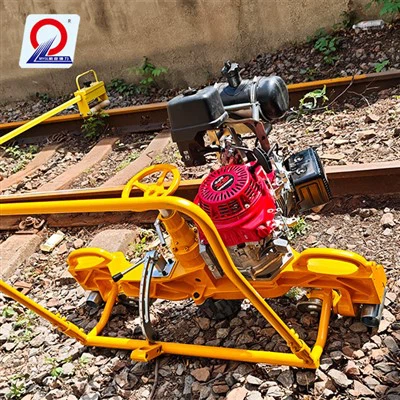
Rail grinding is a crucial maintenance operation for railway tracks, ensuring safety, comfort, and longevity. As a leading supplier of rail grinding machines, we understand the importance of accuracy in the grinding position. In this blog, we will delve into the mechanisms and technologies that enable our rail grinding machines to achieve high - precision grinding.
1. Advanced Measurement Systems
One of the key factors in ensuring the accuracy of the grinding position is the use of advanced measurement systems. Our rail grinding machines are equipped with state - of - the - art sensors that can precisely measure the rail profile. These sensors work in real - time, constantly collecting data on the rail's shape, dimensions, and any irregularities.
Laser - based measurement systems are commonly employed in our machines. Lasers can project a beam onto the rail surface, and by analyzing the reflected light, the system can create a detailed 3D profile of the rail. This high - resolution data allows the machine to identify areas that require grinding with great precision. For example, if there are small bumps or depressions on the rail head, the laser measurement system can detect them and provide accurate coordinates for the grinding operation.
In addition to laser sensors, our machines also use ultrasonic sensors. Ultrasonic sensors are effective in detecting internal flaws and wear within the rail. By measuring the time it takes for an ultrasonic wave to travel through the rail and back, the system can determine the thickness and integrity of the rail material. This information is essential for ensuring that the grinding process does not damage the rail further and that the grinding is done at the correct depth.
2. Computer - Controlled Positioning
Once the measurement data is collected, our rail grinding machines rely on sophisticated computer - controlled positioning systems. These systems use the data from the sensors to calculate the exact position and angle at which the grinding wheels should be applied.
The computer control unit (CCU) in our machines is programmed with pre - defined rail profiles and grinding parameters. Based on the real - time measurement data, the CCU can adjust the position and movement of the grinding wheels in a matter of milliseconds. For instance, if the measurement indicates that a particular section of the rail needs to be ground more deeply, the CCU will command the grinding wheels to move closer to the rail surface and apply more pressure.
The positioning system also takes into account the speed of the machine. As the rail grinding machine moves along the track, the CCU continuously updates the grinding position to ensure that the grinding is consistent and accurate. This is particularly important when dealing with long stretches of track, as any deviation in the grinding position can lead to uneven rail surfaces.
3. Mechanical Design and Stability
The mechanical design of our rail grinding machines plays a significant role in ensuring the accuracy of the grinding position. Our machines are built with a robust and rigid frame that can withstand the vibrations and forces generated during the grinding process.
The grinding wheels are mounted on a precision - engineered spindle system. This spindle system is designed to maintain a stable rotation speed and position, ensuring that the grinding wheels make consistent contact with the rail surface. The bearings used in the spindle system are of high - quality, which reduces friction and wear, and helps to maintain the accuracy of the grinding position over time.
In addition, our machines are equipped with anti - vibration devices. These devices absorb the vibrations generated by the grinding wheels and the movement of the machine, preventing them from affecting the accuracy of the grinding position. For example, rubber mounts and shock absorbers are used to isolate the grinding components from the rest of the machine, minimizing the impact of vibrations on the grinding operation.
4. Automated Feedback and Adjustment
To further enhance the accuracy of the grinding position, our rail grinding machines are equipped with automated feedback and adjustment mechanisms. These mechanisms continuously monitor the grinding process and make real - time adjustments based on the feedback received.
During the grinding operation, the sensors on the machine continue to collect data on the rail profile. If the data indicates that the grinding is not proceeding as planned, the automated feedback system will send a signal to the CCU. The CCU will then analyze the data and make the necessary adjustments to the grinding position, pressure, or speed.
For example, if the sensors detect that the rail profile is not being ground to the desired shape, the CCU can adjust the angle of the grinding wheels or change the grinding pattern. This ensures that the final rail profile meets the strict quality standards required for safe and efficient railway operation.
5. Training and Operator Expertise
While our rail grinding machines are equipped with advanced technologies, the role of the operator cannot be underestimated. We provide comprehensive training programs for our customers' operators to ensure that they can fully utilize the capabilities of our machines.


During the training, operators learn how to operate the measurement systems, understand the data generated by the sensors, and use the computer - controlled positioning system effectively. They also receive training on how to perform routine maintenance and troubleshooting on the machine.
An experienced operator can make a significant difference in the accuracy of the grinding position. They can use their judgment and expertise to make minor adjustments to the machine settings based on the actual conditions of the track. For example, if the track has some unique features or irregularities, an experienced operator can modify the grinding parameters to ensure the best possible results.
Related Products
If you are interested in our rail grinding machines, you may also want to check out some of our related products:
- Rail Profile Weld Grinder: This product is specifically designed for grinding rail welds, ensuring a smooth and accurate profile.
- Rail Grinder Train At Night: Our rail grinder train can operate efficiently even at night, with advanced lighting and control systems.
- Rail Road Grinder: This machine is suitable for grinding both railway tracks and road - rail applications.
Contact Us for Purchase
If you are in the market for a high - quality rail grinding machine that can ensure the accuracy of the grinding position, we invite you to contact us for a detailed consultation. Our team of experts is ready to assist you in selecting the right machine for your specific needs and provide you with comprehensive after - sales support.
References
- Railway Engineering Handbook, various editions.
- Journal of Railway Maintenance and Safety, multiple issues related to rail grinding.
- Technical reports from leading railway research institutions on rail grinding technologies.