

Article Navigation
Introduction
Maintaining railway tracks is rarely straightforward. In high-altitude regions, low oxygen and uneven terrain reduce the efficiency of diesel-powered welding equipment. Long tunnels present tight spaces, excessive noise, and exhaust fumes, making conventional AC welding less reliable. Even standard sections demand high-quality joints, which traditional methods struggle to achieve consistently.
Background and Development of Mobile Rail Welding Machines
Recent advances in DC flash welding and energy storage technology have transformed on-site operations. Our engineering team has integrated high-capacity LiFePO4 batteries and advanced Battery Management Systems (BMS), ensuring stable power delivery during long welding sessions. These improvements make mobile welding machines reliable in extreme environments while maintaining superior weld quality.
Design and Key Features of the YHGR-1200Z
Functional Layout
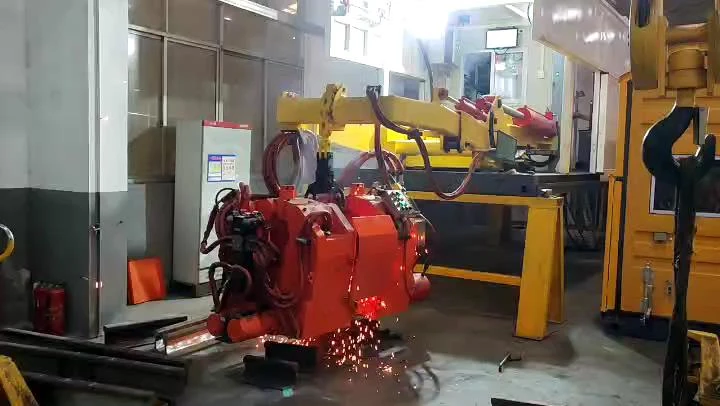
The YHGR-1200Z adopts a two-box layout, separating mechanical, electrical, and energy systems. This design simplifies maintenance and allows operators to quickly access components when adjustments are needed.
Energy Storage System
Total capacity: 466 kWh across 15 battery packs. Configuration: 5 packs in series per group, 3 groups in parallel. Advantages include minimal voltage fluctuations, low polarization, and long cycle life (~6000 cycles at 80% capacity).
Mechanical Structure
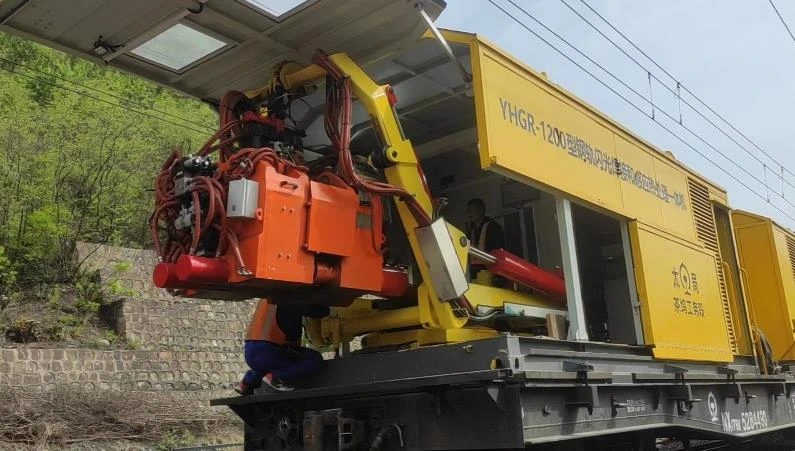
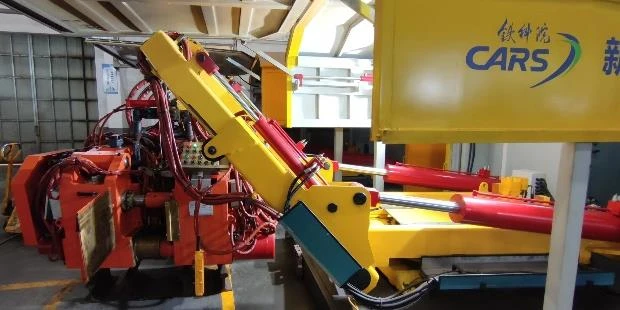
Four-axis design integrates welding and heat treatment, optimizing space. Welding functions include pulsating and continuous flash welding, pressure holding, and high top-forging force. Heat treatment uses integrated coils and a coaxial transformer for automatic positioning, induction heating, air cooling, and infrared temperature monitoring.
Electrical Control
Mid-frequency DC inverter ensures consistent welding current and voltage, producing smoother welds with fewer adjustments.
Testing and Performance Verification
Internal Performance Tests
Rated power ≥ 200 kW; measured output: 204 kW. Input voltage: 380–420 V; measured: 380–420 V. IGBT temperature during continuous welding <75°C.
Weld Quality Observations
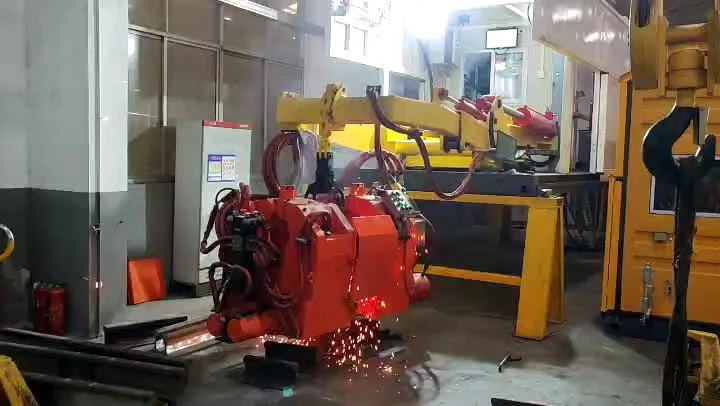
DC flash welding produced smoother welds and finer grain structures compared to AC welding. Operators reported fewer adjustments, reducing downtime and improving efficiency.
Third-Party Verification
Independent testing confirmed compliance with performance standards for high-altitude and plain-region operations. Type testing met all national and industry requirements.
Safety Analysis
Electrical and Fire Safety
Overcurrent and short-circuit protection, thermal management, and safety valves included. LiFePO4 batteries are stable up to 600°C.
Mechanical Safety
Cranes and lifting devices certified for 8-ton capacity, safety factor 1.6. Precise hydraulic controls with multi-level limits and locking devices.
Emergency Procedures
Manual pumps allow clamp release and safe machine recovery during power or hydraulic failures. Rapid-response plans for track breaks include coordination with local rail offices and ready access to emergency tools.
Technical Standards and Application Scope
Operating temperature: −10°C to 45°C. Max humidity: 90% RH. Max altitude: 5500 m. System composition: mechanical, electrical, hydraulic, cooling water, air-cooling, work management, energy storage. Designed for on-site DC flash welding and post-weld heat treatment on rail welding vehicles.
Cost Reduction Advantages
Labor Efficiency: Smaller crews can complete complex operations. Maintenance Savings: Battery-powered operation eliminates fuel and engine maintenance. Environmental Benefits: Low noise and zero exhaust emissions, ideal for tunnels and urban areas. Improved Quality: DC flash welding produces stronger, more reliable welds, minimizing rework.
Contact for More Information
Email: elinachina@126.com
WhatsApp: +86 15617710309
Website: www.qlrailwaymachine.com
© 2025 Henan Qiangli Machinery Co., Ltd. All rights reserved. · Official website · Rail Grinding Machine


