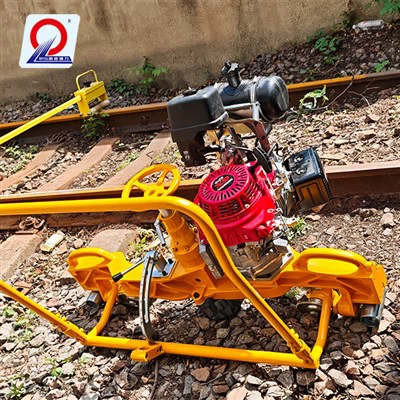
What is the maximum depth a rail tamper can reach?
As a supplier of rail tampers, I often get asked about the maximum depth these machines can reach. Rail tampers are crucial pieces of equipment in railway maintenance, and understanding their capabilities is essential for efficient and effective track upkeep.
The Role of Rail Tampers in Railway Maintenance
Railway tracks are subject to constant stress and wear due to the passage of trains. Over time, the ballast, which is the crushed stone or gravel beneath the railroad ties, can become compacted and uneven. This can lead to irregularities in the track surface, affecting the safety and comfort of train travel. Rail tampers are used to compact the ballast around the ties, ensuring a stable and level track.
Tamping is a precise operation that involves inserting tamping tools into the ballast and vibrating them to rearrange the stones, creating a more solid foundation for the ties. The depth to which the tamping tools can reach is a critical factor in determining the effectiveness of the tamping process. Tamping in Railway provides more detailed information on the importance of tamping in railway maintenance.
Factors Affecting the Maximum Depth of a Rail Tamper
Several factors influence the maximum depth a rail tamper can reach. These include the design of the tamper, the type of ballast, and the specific requirements of the railway track.
Design of the Rail Tamper
The design of the rail tamper plays a significant role in determining its maximum tamping depth. Different models of rail tampers are equipped with tamping tools of varying lengths. Longer tamping tools can reach deeper into the ballast, allowing for more comprehensive compaction.
Modern rail tampers are designed with advanced hydraulic systems that provide the necessary force to drive the tamping tools into the ballast. The hydraulic pressure and the power of the tamper's motor also contribute to its ability to reach greater depths. Additionally, some rail tampers are equipped with adjustable tamping heads, which can be set to different depths depending on the specific needs of the track.
Type of Ballast
The type of ballast used in the railway track also affects the maximum depth a rail tamper can reach. Different types of ballast have different particle sizes and densities, which can impact the ease with which the tamping tools can penetrate the material.
For example, well - graded ballast with a mix of particle sizes tends to be more easily compacted than ballast with a uniform particle size. Coarser ballast may require more force to penetrate, while finer ballast may offer less resistance but may also require more careful compaction to avoid over - compaction.
Track Requirements
The specific requirements of the railway track, such as the type of trains using the track and the frequency of train traffic, can also influence the maximum tamping depth. Tracks that carry heavy - haul trains or experience high traffic volumes may require deeper tamping to ensure long - term stability.
In addition, the condition of the track, including the presence of any underlying issues such as soft subgrades, may also affect the tamping depth. In some cases, deeper tamping may be necessary to address these issues and provide a more stable foundation for the track.
Typical Maximum Depths of Rail Tampers
The maximum depth a rail tamper can reach can vary widely depending on the factors mentioned above. In general, most standard rail tampers can reach depths of between 100 mm and 300 mm. However, some specialized rail tampers, designed for heavy - duty applications or specific track conditions, can reach depths of up to 500 mm or more.
Rail Tamper offers a range of rail tamper models with different maximum tamping depths to meet the diverse needs of railway maintenance projects. Our customers can choose the tamper that best suits their specific requirements, whether it's for a small - scale track repair or a large - scale railway construction project.
Importance of Optimal Tamping Depth
Achieving the optimal tamping depth is crucial for ensuring the long - term performance and safety of the railway track. If the tamping depth is too shallow, the ballast may not be adequately compacted, leading to track settlement and unevenness over time. This can result in increased wear and tear on the train wheels and suspension systems, as well as potential safety hazards.
On the other hand, if the tamping depth is too deep, it can cause damage to the underlying subgrade or disrupt the natural drainage of the track. This can lead to waterlogging and other issues that can compromise the stability of the track.
Therefore, it's essential to carefully consider the specific requirements of the track and choose a rail tamper with the appropriate maximum tamping depth. Our team of experts can provide guidance on selecting the right rail tamper for your project, taking into account factors such as track type, ballast condition, and traffic volume.
Advancements in Rail Tamper Technology
In recent years, there have been significant advancements in rail tamper technology, aimed at improving the efficiency and effectiveness of the tamping process. These advancements have also had an impact on the maximum depth a rail tamper can reach.
One of the key developments is the use of intelligent control systems in rail tampers. These systems can automatically adjust the tamping depth based on real - time data from sensors on the tamper. This allows for more precise and consistent tamping, ensuring that the optimal depth is achieved across the entire length of the track.
Another advancement is the development of more powerful and efficient hydraulic systems. These systems can provide greater force to drive the tamping tools deeper into the ballast, enabling rail tampers to reach greater depths with less energy consumption.
Conclusion
In conclusion, the maximum depth a rail tamper can reach depends on several factors, including the design of the tamper, the type of ballast, and the specific requirements of the railway track. While most standard rail tampers can reach depths of between 100 mm and 300 mm, specialized models can reach depths of up to 500 mm or more.


As a leading supplier of Ballast Tamper Machine, we are committed to providing high - quality rail tampers that meet the diverse needs of our customers. Our range of products offers a variety of maximum tamping depths, ensuring that you can find the right solution for your railway maintenance project.
If you are interested in learning more about our rail tampers or would like to discuss your specific requirements, please feel free to contact us. We look forward to the opportunity to work with you and help you achieve optimal track performance.
References
- Railway Maintenance Technology Handbook, various authors
- Journal of Railway Engineering Research, multiple issues
- Industry reports on railway maintenance equipment trends