

US Lawmakers and Rail Unions Question Automated Track Inspections
Washington, D.C. – A recent proposal to reduce manual rail inspections in the United States has drawn criticism from lawmakers, labor unions, and industry experts concerned about track safety. In April, the Association of American Railroads (AAR) requested a federal exemption to allow freight operators using automated technology to cut manual inspections by 75%, reducing the schedule from twice a week to just twice a month.
Union Concerns and Safety Risks
Rail unions argue that automated inspection systems can only detect a limited set of defects, leaving critical issues such as tie fractures, ballast water intrusion, and subgrade problems unnoticed until they escalate. Labor leaders emphasize that human inspectors often catch subtle defects that automated systems miss, and they warn that reducing manual inspections could increase the risk of derailments and other accidents.
"Automation is helpful, but it cannot replace the trained eyes and judgment of experienced rail inspectors," says Tony Cardwell, president of the rail maintenance workers union.
Investigations of past derailments support this caution. In 2021, an Amtrak derailment resulted in three fatalities, and reports highlighted that human inspectors had previously identified track issues that automated equipment did not flag.
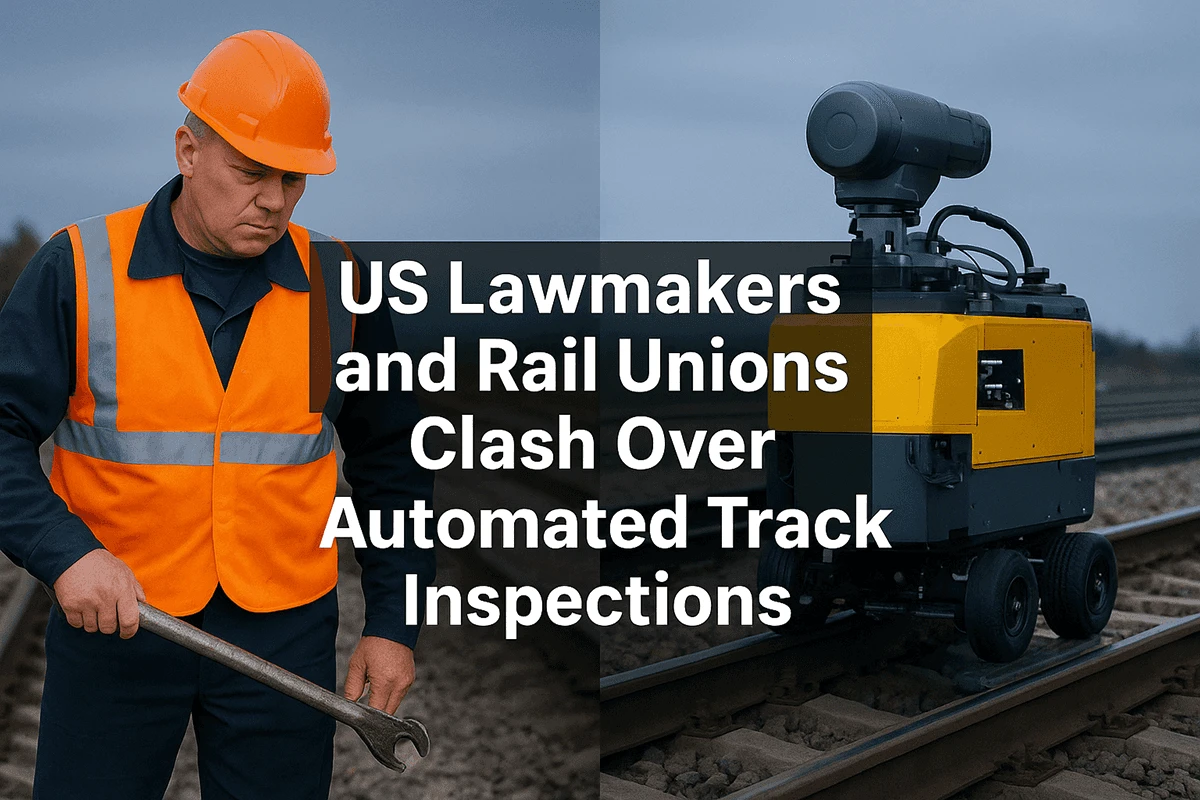
Automated vs Manual Inspections: Key Comparison
Automated Systems
Pros: Consistent, fast, data-rich
Cons: Limited defect detection, cannot sense foundation issues
Manual Inspections
Pros: Detects subtle defects, visual verification
Cons: Labor-intensive, slower, costlier
Expert Analysis
While automation improves efficiency, experts warn it cannot fully replace human judgment. Subtle defects, early-stage tie cracks, and ballast settling require professional inspection. A hybrid approach combining automated measurements with targeted manual checks is considered the safest and most effective method for rail safety and operational reliability.
Technology Solutions
Advanced QL Railway Rail Track Measurement systems complement automated inspections by providing precise measurements of track geometry and detecting subtle anomalies. This enables operators to maintain compliance, identify risks early, and optimize maintenance schedules.
Explore Rail Track MeasurementLegislative and Industry Outlook
The Federal Railroad Administration has not yet made a final decision on the exemption request. Lawmakers and unions are urging the FRA to prioritize safety and maintain adequate manual inspections. Industry observers believe that integrating automated systems with precision measurement tools and selective manual checks will likely become the preferred strategy.
Conclusion
As discussions continue, the debate highlights the importance of balancing efficiency with safety. Automation is valuable, but human expertise remains critical. Combining automated systems with high-precision Rail Track Measurement equipment provides a comprehensive solution for modern, safe, and efficient rail operations.


