

Ultimate Guide to Railway Track Grinding Machines
Ultimate Guide to Railway Track Grinding Machines for Efficient Rail Maintenance
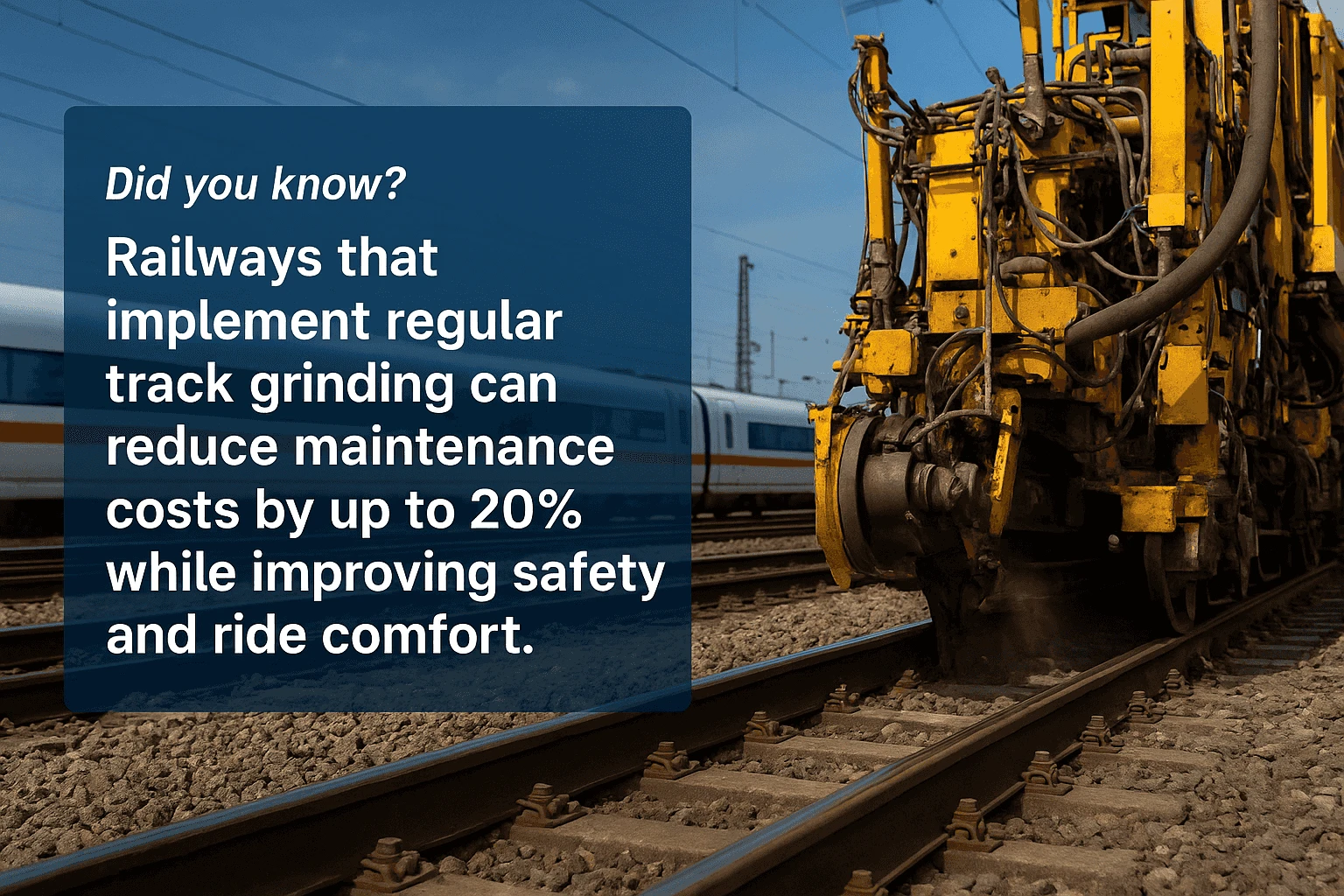
Did you know? Railways that implement regular track grinding can reduce maintenance costs by up to 20% while improving safety and ride comfort.
Railway infrastructure is the backbone of modern transportation, supporting both high-speed passenger services and heavy freight operations. Maintaining track geometry and rail surface quality is critical: uneven rails, corrugations, or cracks can lead to increased wheel wear, higher energy consumption, and operational disruptions.
Railway track grinding machines are specialized equipment designed to restore rail profiles and eliminate surface defects, ensuring optimal performance, safety, and cost-efficiency. You can explore professional grinding machines here. This guide provides a comprehensive overview of machine operation, types, benefits, and maintenance best practices.
Why Track Maintenance is Essential
Tip: Poor track maintenance increases derailment risks and operational costs.
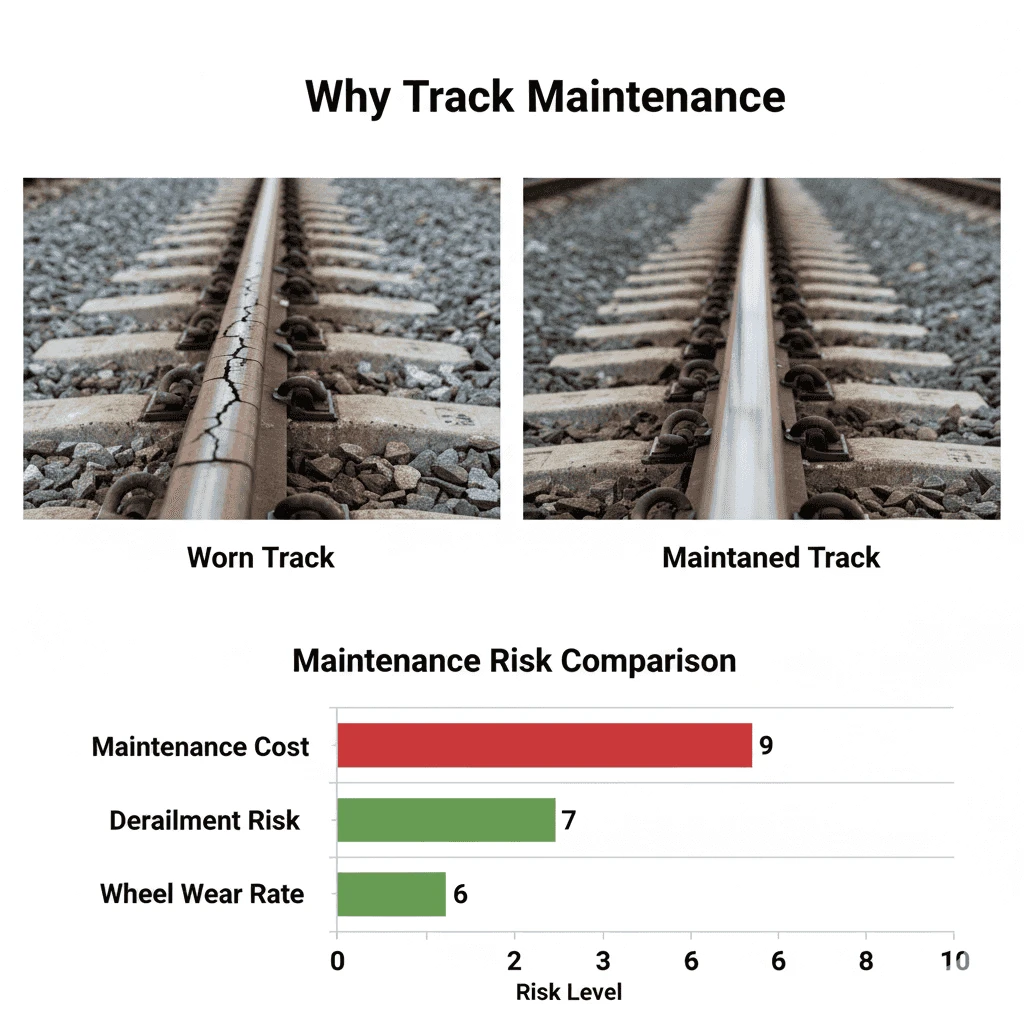
- Rail wear accelerates, increasing rolling stock maintenance costs.
- Noise and vibration levels rise, affecting passenger comfort.
- Safety risks increase, with higher likelihood of derailments or rail fractures.
- Operational reliability decreases, causing delays and increased downtime.
How Railway Track Grinding Machines Work
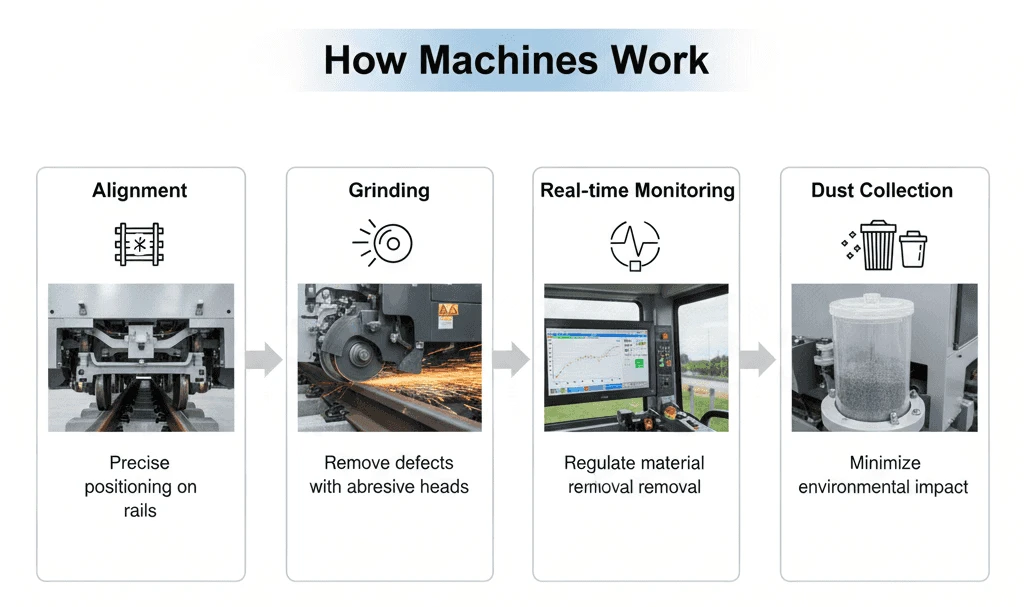
- Machine alignment: Ensuring proper positioning on the track.
- Grinding process: Abrasive grinding heads remove corrugations, cracks, and other irregularities.
- Real-time monitoring: Sensors and control systems regulate material removal to avoid over- or under-grinding.
- Dust and debris management: Integrated collection systems minimize environmental impact.
Types of Railway Track Grinding Machines
- Rail Grinders: Restore rail profiles and remove surface imperfections.
- Single-pass: completes grinding in one operation.
- Multi-pass: gradually removes material for precise shaping.
- Switch Grinders: Handle high-stress switches and crossings with complex geometries.
- Profile & Weld Grinders: Maintain rail profiles and smooth weld joints for continuous operation.
Key Features to Look For
- Number and configuration of grinding heads for coverage efficiency.
- Advanced control systems for real-time monitoring and automated adjustment.
- Durability and reliability for consistent performance under heavy-duty use.
- Ease of maintenance to minimize downtime.
- User interface and remote operation for safety and operational efficiency.
Highlight: Modern machines with GPS and sensors reduce human error and improve grinding precision.
Benefits of Using Grinding Machines
- Reduced rail wear: Smoother rails lower wheel and track damage.
- Energy efficiency: Lower friction reduces fuel and electricity consumption.
- Enhanced safety: Regular grinding prevents defects that could compromise structural integrity.
- Operational reliability: Minimized delays and disruptions.
- Cost savings: Lower repair and replacement costs, optimized maintenance schedules.

Case Example: Swiss Federal Railways reduced rail maintenance costs by 30% after implementing grinding machines.
Technology Driving Modern Grinding Machines
- Computer-controlled grinding: Automated depth and profile control.
- Advanced abrasives: Diamond and carbide improve cutting efficiency and longevity.
- GPS-assisted positioning: Ensures uniform grinding along curves and complex track sections.
- Remote monitoring: Centralized supervision improves safety and workflow.
Maintenance Best Practices
- Inspect and replace grinding heads regularly.
- Lubricate moving parts and calibrate sensors.
- Clean dust collection systems.
- Follow manufacturer-recommended maintenance schedules.
- Train operators on safety protocols and troubleshooting procedures.
Case Studies
- Swiss Federal Railways (SBB): Integrated rail grinders across high-speed lines, improving ride quality and reducing maintenance costs by 30%.
- Australian Rail Track Corporation (ARTC): Systematic grinding program extended track lifespan and improved reliability on freight corridors.
- Union Pacific Railroad (USA): Deployment of state-of-the-art grinders reduced surface defects and optimized track maintenance scheduling.
Future Trends
- Automation & AI integration: Machines adjust in real-time based on wear data.
- Environmentally friendly grinding: Reduced energy use and waste.
- Predictive maintenance: Data-driven scheduling prevents defects before they impact operations.
FAQ
Q1: How frequently should tracks be ground?
A: Depending on traffic intensity and track usage-typically several months to a year.
Q2: Difference between single-pass and multi-pass grinders?
A: Single-pass completes in one operation; multi-pass gradually removes material for precision.
Q3: Can automated grinders reduce manual inspections?
A: Yes, advanced sensors and monitoring reduce the need for manual checks, but occasional inspections remain essential.
Contact Information
Optimize your rail operations today with professional track grinding machines to enhance safety, efficiency, and rail lifespan.


