

On this page
- ❓ Why Do Some Railways Need Custom Steel Rails Instead of Standard Ones?
- ❓ What Makes High Manganese Steel So Important for Heavy-Haul Railways?
- ❓ How Does Rail Profile Affect Train Safety and Track Longevity?
- ❓ Can Railway Steel Really Be Customized for Tight Curves Like Mountain or Metro Lines?
- ❓ Why Is Surface Treatment Critical for Rails in Coastal or Industrial Zones?
- ❓ How Do Modern Rail Standards Like EN 13674-1 Ensure Quality and Compatibility?
- ❓ When Should You Consider Replacing Rails - and Can You Customize the Replacement?
Railway Steel Explained: 7 Key Questions Every Infrastructure Engineer Should Know
❓ Why Do Some Railways Need Custom Steel Rails Instead of Standard Ones?
While standard rails (like UIC60 or AREMA 136RE) work well for mainline networks, many specialized applications - such as heritage railways, mining corridors, port terminals, or urban transit with tight curves - demand custom railway steel for safety and efficiency. Standard profiles may not handle extreme loads, corrosive environments, or spatial constraints. For example, a mountain railway with 15m-radius curves cannot use straight, mass-produced rails without risking derailment or accelerated wear. That's where customizable rail profiles and pre-curved sections become essential. Learn more about rail geometry standards from International Union of Railways (UIC).
❓ What Makes High Manganese Steel So Important for Heavy-Haul Railways?
High manganese steel (like Mn13) is prized for its "work-hardening" property - the more it's stressed, the harder its surface becomes. This makes it ideal for heavy-haul railways carrying 30,000+ tonne ore trains, where standard carbon steel would wear out in months. According to research published in ScienceDirect, Mn-steel rails can last 3–5x longer under abrasive conditions. If your operation involves extreme mechanical stress, consider high manganese steel rail as a long-term cost-saving solution.
❓ How Does Rail Profile Affect Train Safety and Track Longevity?
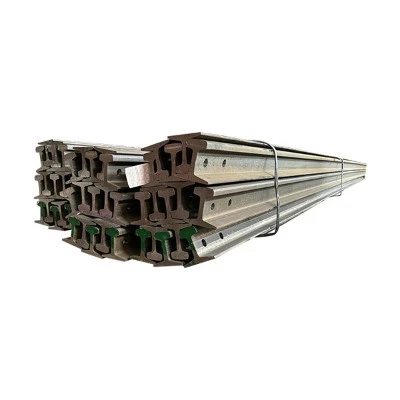
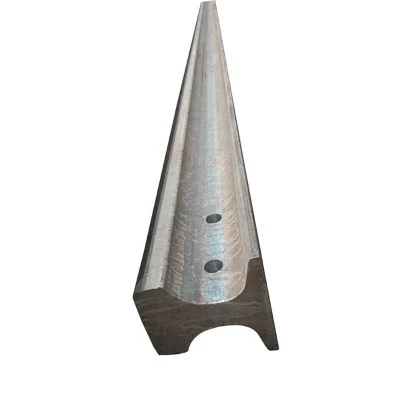
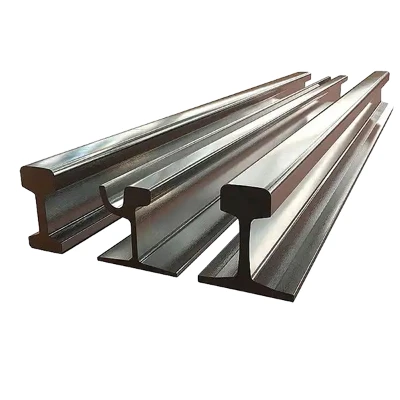
The rail profile - the cross-sectional shape - directly influences wheel-rail contact, load distribution, and wear patterns. A mismatched profile can cause flange climbing, increased friction, or accelerated head wear. Standards like ISO 5003 define common profiles, but real-world conditions often require deviations. For instance, trams in city centers may need flatter heads to reduce noise, while freight lines need taller webs for vertical load support. Our custom rail track solutions let you specify exact profiles based on your rolling stock and traffic type.
❓ Can Railway Steel Really Be Customized for Tight Curves Like Mountain or Metro Lines?
Absolutely. Pre-curved rails are not just possible - they're essential for safety in low-radius environments. Standard rails bent on-site can develop internal stresses, leading to premature fatigue or cracking. Factory-precurved rails, however, are formed under controlled heat and pressure, ensuring structural integrity. According to Wikipedia's rail profile entry, curves under 50m radius almost always require factory customization. We offer pre-curved sections down to 15m radius - ideal for mountain railways, metro loops, and industrial switchyards.
❓ Why Is Surface Treatment Critical for Rails in Coastal or Industrial Zones?
Salt spray, chemical exposure, and high humidity accelerate corrosion - which weakens rail structure and increases maintenance costs. Untreated rails in port environments may need replacement every 3–5 years. Surface treatments like hot-dip galvanizing or epoxy coating can extend service life by 2–3x. The National Association of Corrosion Engineers (NACE) recommends protective coatings for any rail exposed to chloride or sulfur compounds. Explore our corrosion-resistant railway steel options for ports, chemical plants, or seaside tramways.
❓ How Do Modern Rail Standards Like EN 13674-1 Ensure Quality and Compatibility?
EN 13674-1 is the European standard governing rail dimensions, chemical composition, and mechanical properties. It ensures rails from different manufacturers can be safely joined and perform predictably under load. The standard specifies tolerances as tight as ±0.1mm on critical dimensions - which we meet or exceed in our custom rail production. For global context, compare with ASTM A1 (USA) or BS 11 (UK). Compliance isn't optional - it's the foundation of interoperable, safe rail infrastructure.
❓ When Should You Consider Replacing Rails - and Can You Customize the Replacement?
Rail replacement is typically triggered by head wear (>10mm vertical loss), internal cracks (detected via ultrasonic testing), or corrosion thinning. But don't just replace "like-for-like." Use replacement as an opportunity to upgrade. For example, if your line now handles heavier trains, switch to a 60kg/m or 75kg/m profile. If noise is an issue, choose a dampened rail head. If corrosion is eating your budget, add galvanizing. With custom railway steel, you're not limited by catalog options - you design the solution that fits your current and future needs. For lifecycle cost analysis, refer to U.S. Federal Railroad Administration guidelines.
Need Custom Railway Steel for Your Unique Track Conditions?
📩 Send us your drawing or specification - get a free engineering consultation + quote.
📧 Email: elinachina@126.com
📞 WhatsApp: +86 15617710309
🌐 Website: www.qlrailwaymachine.com
© 2025 QL Railway Machine. All Rights Reserved. | www.qlrailwaymachine.com | Knowledge Base: Railway Steel Customization


