

How to Grind Railway Tracks: A Complete Guide to Rail Grinding Types, Principles, and Science
Rail grinding is one of the most essential maintenance practices in modern railway systems. It ensures safe, smooth, and efficient train operations by preserving the geometric and surface integrity of rails-especially in high-traffic or high-speed lines. But not all grinding is the same. Depending on the rail's condition and purpose, engineers apply different strategies: pre-grinding, preventive grinding, and corrective grinding. In this article, we'll explain exactly what each type involves, the core principles guiding rail grinding, and the science behind why it works. For more about professional tools, see our Rail Grinding Machine.
Part 1: Types of Rail Grinding
Rail grinding is broadly categorized into two areas-mainline rails and turnout (switch) rails-and further divided into three functional types based on timing and purpose.
1. Pre-Grinding
Pre-grinding is performed immediately after new rails are installed but before regular train service begins.
Purpose:
- Remove the decarburized layer on the rail surface.
- Eliminate surface defects from production, welding, transportation, or track laying.
- Correct the rail head profile to match design specifications.
- Improve welded joint smoothness.
2. Preventive Grinding
Preventive grinding is a scheduled, periodic maintenance activity applied to rails still in good condition but showing early wear signs.
Purpose:
- Restore ideal rail head profile.
- Remove micro-cracks and shallow defects.
- Optimize wheel–rail contact relationship.
- Prevent rolling contact fatigue (RCF), corrugation, or rail head deformation.
For more technical insights: Wikipedia – Rail Grinding, Engineering Toolbox – Rolling Contact Fatigue.
3. Corrective (Remedial) Grinding
Corrective grinding is used after damage has occurred when rails show visible or measurable defects.
Purpose:
- Re-profile the rail head.
- Mitigate damage: rolling contact fatigue cracks, wave wear, surface scratches.
Part 2: Core Principles of Rail Grinding
- Minimize material removal while achieving target rail profile.
- Prioritize preventive grinding over corrective for efficiency.
- Follow grinding cycles based on traffic, speed, and rail condition.
Learn more: ScienceDirect – Rail Wear and Contact Mechanics.
Part 3: The Science Behind Rail Grinding
1. Wheel–Rail Contact Geometry
Railways rely on precise wheel–rail geometry. Wheels shift laterally and yaw, affecting contact points.
- Straight tracks: low equivalent conicity improves stability.
- Curves: higher conicity allows smooth turns.
See Railway Gazette – Infrastructure for case studies.
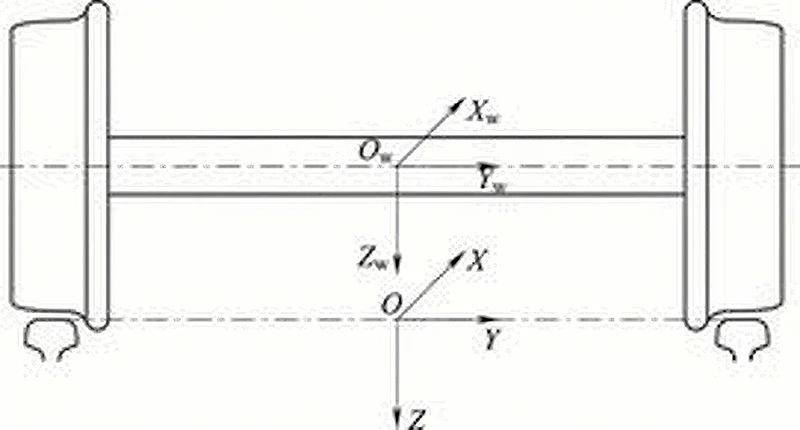
Fig.1: 9 mm clearance between wheel flange and rail inner face.
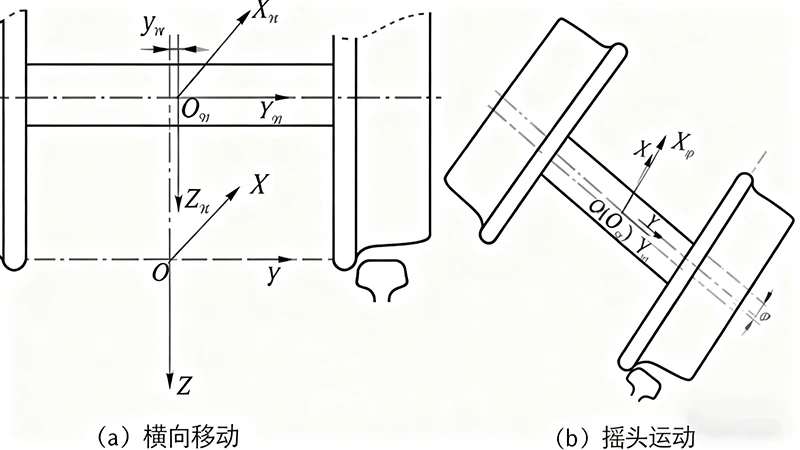
Fig.2: Lateral displacement and yaw of wheelsets.
2. Wheel–Rail Contact Stress
Vertical load creates an elliptical contact patch (Hertzian contact).
- Larger patch → lower stress → slower fatigue.
- Smaller/uneven → high stress → cracks/spalling.
Learn more: Wikipedia – Hertzian Contact Stress.
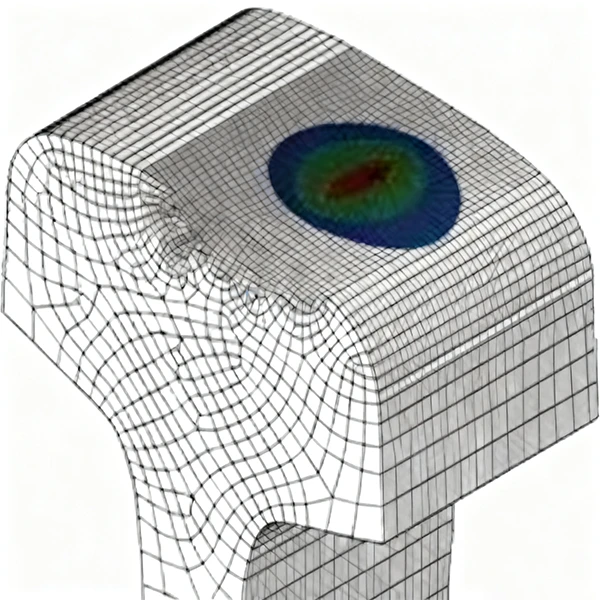
Fig.3: Hertzian contact patch under wheel load.
3. Creep and Wear Mechanisms
Train wheels experience micro-slip (creep) at the contact interface.
- Adhesion zone: pure rolling.
- Slip zone: micro-sliding causes wear.
Minimizing slip zone reduces wear. Learn more: ScienceDirect – Creep in Engineering Materials.
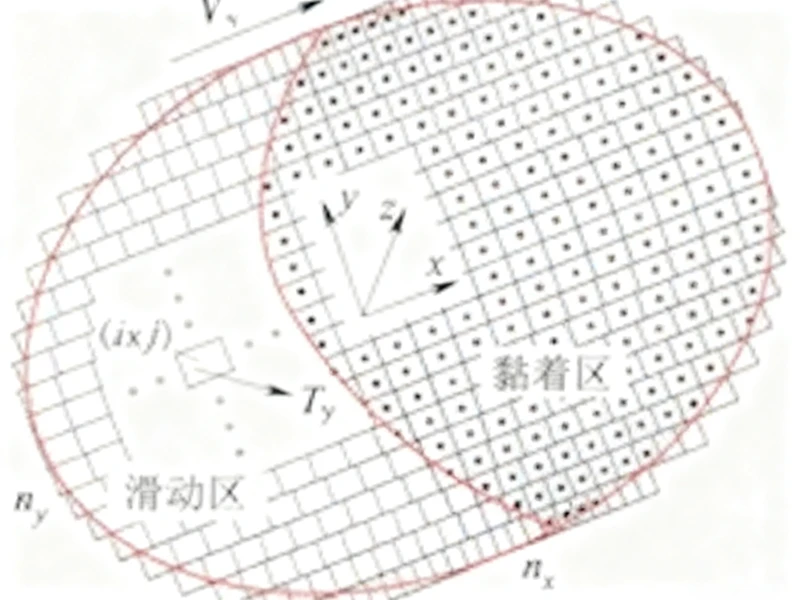
Fig.4: Adhesion (rolling) vs slip (sliding) zones.
Conclusion: Precision Grinding = Smarter Railways
Rail grinding impacts safety, efficiency, noise, ride comfort, and lifecycle cost. Using pre-, preventive, and corrective grinding properly ensures smoother, longer-lasting tracks.
Explore modern rail grinding solutions for more efficient maintenance.


