

I. Identify the Type of Operation and Requirements
Before selecting maintenance tools, it's important to first understand their intended use and application scenarios. Tool performance requirements vary significantly across different operations. Common types of operations include:
Rail cutting: For example, repairing broken rails during rail replacement
Sleeper drilling: For installing bolts, spikes, and fasteners
Rail grinding: Eliminating rail surface defects such as corrugation and cracks
Tamping: Maintaining the compactness of the ballast beneath the sleepers and ensuring track stability
Gauge and gap measurement: Detecting track geometry
Fastener installation and removal: For tightening spikes and bolts
II. Consider the working environment and site conditions
Power availability: Urban subways and station areas typically have electricity, allowing for the use of electric equipment. Mountainous areas and outdoor work areas require internal combustion equipment.
Workspace: Confined spaces (such as tunnels) are more suitable for low-noise, emission-free electric equipment.
Work intensity and frequency: For long-term, frequent use, durable equipment should be preferred. Lightweight portability is a requirement: Repair teams or aerial work are more suited to lightweight handheld tools.
III. Matching Power Type with Equipment Performance
There are three common power types for railway maintenance tools:
1. Electric
Advantages: Low noise, no exhaust emissions, environmentally friendly and clean
Disadvantages: Requires a power supply or limited battery life
Applicable to: Urban rail transit, tunnels, and workshop maintenance
2. Petrol/Diesel
Advantages: Powerful, versatile, no external power supply required
Disadvantages: Loud noise, high emissions, relatively complex maintenance
Applicable to: Off-road lines, mountain railways, and emergency repairs
3. Hydraulic/Pneumatic Tools
Typically used for large equipment linkage or high-frequency, heavy-load construction, such as track tamping and tensioning equipment. Requires use with a hydraulic pump station or air compressor. When selecting a tool, consider the workload intensity and power supply environment, and carefully evaluate the power system's suitability and ongoing maintenance costs.
IV. Recommended Selection of Common Railway Maintenance Tools
1. Rail Cutting Tools
Electric Rail Cutters: Lightweight and environmentally friendly, suitable for urban subways and routine maintenance.
Gasoline Rail Cutters: Powerful, suitable for areas without electricity and high-intensity cutting operations.
2. Drilling Equipment
Handheld Drills (Electric/Internal Combustion): Used for drilling holes in rails and sleepers. When selecting a model, consider drill bit compatibility, cooling system, and positioning accuracy.
3. Grinding Equipment
Hand-Push Grinders: Flexible, suitable for corrugation repair and rust removal.
Specialized Turnout Grinders: Suitable for handling complex areas such as point rails and switches. For advanced needs, consider automated or vehicle-mounted grinding systems.
4. Tamping Tools
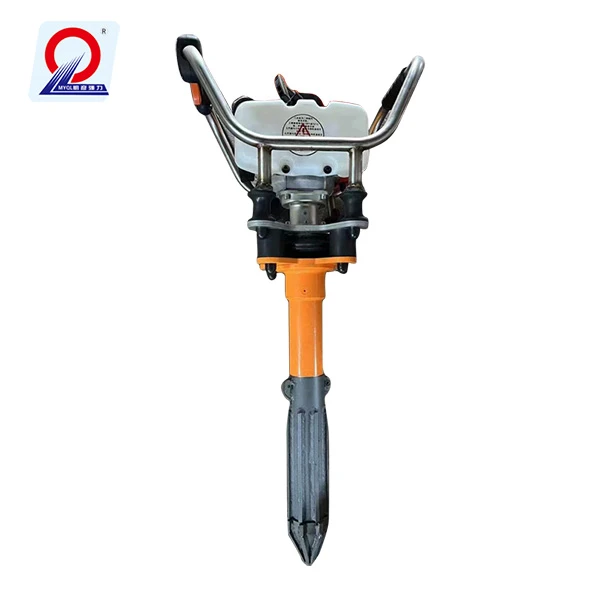
Electric/Internal Combustion Tamping Picks: Suitable for routine sleeper tamping and maintenance.
Large Tamping Machines: Used for precision tamping of the trackbed and track leveling.
5. Track measurement equipment
Digital tools such as laser track gauges and rail gap gauges are suitable for high-speed railways and high-precision maintenance projects.
V. Focus on safety and certifications
As specialized equipment, railway tools must possess robust safety mechanisms:
Equipped with an emergency stop device.
CRCC certification or relevant railway bureau testing qualifications.
Fireproof, explosion-proof, dust-proof, and noise-reducing designs.
Standardized operating instructions and training support.
High-quality tools not only improve efficiency but also prevent safety hazards caused by equipment failure.


