

Rail Lifting Jack Industry Guide 2025: Types, Functions, Maintenance & Practical Applications
On this page


📧 Email: elinachina@126.com
📞 WhatsApp: +86 15617710309
🌐 Website: www.qlrailwaymachine.com
Introduction to Rail Lifting Jacks
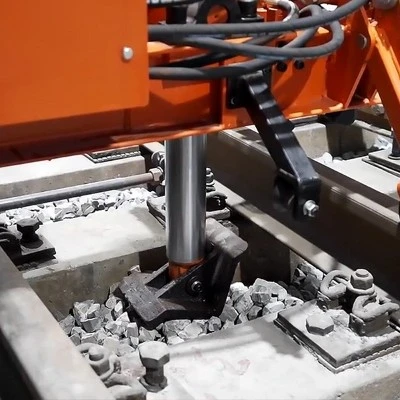
Rail lifting jacks, also known as track lifting jacks or railway jacks, are essential tools in modern railway maintenance. They enable the safe lifting of rails and sleepers, allowing track engineers to perform alignment correction, gauge adjustment, ballast replacement, and emergency track repairs. These jacks are designed for durability, stability, and efficiency, supporting both manual and mechanized track maintenance operations.
Working Principle of Rail Lifting Jacks
- Mechanical Advantage: Manual jacks use screws, levers, or gears to multiply human force for lifting rails and sleepers.
- Hydraulic Force Multiplication: Hydraulic jacks utilize pressurized fluid to achieve high lifting capacities with minimal effort.
- Load Distribution: Specialized base plates and lifting pads ensure the rail weight is evenly distributed to prevent track or sleeper damage.
- Precision Control: Adjustable height and pressure allow fine alignment and gauge correction without overloading components.
Types and Mechanisms of Rail Lifting Jacks
- Manual (Mechanical) Jacks: Portable, human-powered jacks suitable for small repairs and emergency maintenance in remote locations.
- Hydraulic Jacks: Powered by hand or electric pump; capable of lifting heavy rails efficiently. Ideal for large-scale track maintenance.
- Single-Rail vs Dual-Rail: Single-rail jacks lift one rail at a time, whereas dual-rail jacks can lift an entire track section simultaneously.
- Hand-Pump vs Electric Pump: Choice depends on site power availability and operation frequency.
| Feature | Hydraulic Rail Jack | Mechanical Rail Jack |
| Lifting Capacity | 10–30+ tons | 3–10 tons |
| Operation Effort | Low, fast | High, slower |
| Best Use | Major track works, frequent lifting | Minor repairs, emergency maintenance |
| Precision | High, smooth control | Medium, depends on operator |
| Maintenance | Hydraulic fluid & seals | Lubrication only |
| Weight | Heavier | Lighter, portable |
| Cost | Higher | Lower |
Practical Applications & Case Studies
- Track Leveling: Correct settlement in high-speed and heavy haul lines.
- Ballast Work: Creates space for tamping machines and stabilizing track beds.
- Urban Maintenance: Compact jacks allow work in tunnels, stations, and congested areas.
- Emergency Response: Quick lifting for derailments or damaged sleepers.
- Case Study: Metro line maintenance team used hydraulic jacks to lift 200 meters of track in under 2 hours for inspection and ballast replacement, reducing downtime by 60%.
Safety Guidelines & Maintenance
- Always place jacks on stable base pads; avoid uneven surfaces.
- Check hydraulic oil levels, seals, and mechanical threads before use.
- Follow load limits to prevent structural damage or accidents.
- Periodic maintenance: lubricate threads, inspect pads, replace worn seals.
- Store in dry conditions to prevent corrosion and extend service life.
FAQ
- Q1: What is the difference between hydraulic and mechanical rail jacks?
A: Hydraulic jacks use fluid pressure for heavy lifting; mechanical jacks rely on screws and levers, suitable for lighter loads.
- Q2: Can one person operate a rail lifting jack?
A: Small manual jacks yes; heavy hydraulic/electric jacks require a team for safety.
- Q3: How frequently should jacks be inspected?
A: Before every use for safety, and routine maintenance per manufacturer guidelines.
- Q4: Are there jacks suitable for tunnels and urban tracks?
A: Compact manual and small hydraulic jacks are designed for restricted spaces.


