

Why Predictive Tamping Reduces Rail Derailments | Qiangli Machinery
Safety Starts Beneath the Rails: How Predictive Tamping Prevents Costly Derailments
Why Track Maintenance Matters: The Real-World Cost of Derailments
Railway derailments are more than operational setbacks-they trigger cascading financial losses. For B2B rail operators, understanding these costs is essential for strategic maintenance investment.
| Cost Category | Cost (USD) | Details |
|---|---|---|
| Freight Loss | $500K – $2M | Chemicals, grain, containers |
| Track & Repair | $200K – $1M | Reballasting, rail welding |
| Rolling Stock Damage | $100K – $500K | Locomotive & wagon repairs |
| Delay Penalties | $50K – $300K/day | Contractual penalties |
| Environmental Cleanup | $1M+ | Spills, leaks, remediation |
Source: Transportation Research Part A: Policy and Practice
For procurement managers, a single derailment can erase years of maintenance savings-making predictive and precise tamping equipment a high-ROI investment.
Proven Results: Real-World Effectiveness of Predictive Tamping
On a major European freight line, implementing a predictive tamping schedule based on track geometry monitoring reduced derailments by 42% over two years. Key insights:
- Timing is critical: Tamping at optimal intervals prevents small deviations from escalating.
- High-frequency vibration: Ensures uniform ballast compaction and long-term track stability.
- Hydraulic vs. mechanical: Hydraulic tampers offer superior precision, speed, and consistency.

Figure: Track geometry deviations before and after predictive tamping (example curve)
This demonstrates a direct correlation between tamping quality, frequency, and reduced derailment risk-critical data for informed procurement decisions.
YCD-32 Hydraulic Switch Tamper
- Engine: GX390, 6.6 kW, 3600 r/min
- Vibration frequency: 66.7 Hz
- Exciting force: 31.5 kN
- Hydraulic pressure: 4–5 MPa
- Insertion depth: 90–100 mm
- Net weight: 436 kg
- Dimensions: 1430 × 930 × 1700 mm
- Certification: CE & ISO 9001
ND-4 Railway Ballast Tamping Machine
- Engine: Two-Stroke Petrol, 1.6 hp
- Vibration frequency: 120–150 Hz
- Eccentric shaft speed: 8500 ±500 r/min
- Exciting force: 4200 N
- Dimensions: 350 × 360 × 1030 mm
- Net weight: 14.5 kg
- Certification: CE
YD-22III Railroad Ballast Tamper
- Engine: Four-stroke gasoline, 10.5 kW, 3600 rpm
- Hydraulic pressure: 5–6 MPa
- Vibration frequency: 66.7 Hz
- Efficiency: >300 sleepers/hour
- Net weight: 1385 kg
- Dimensions: 2150 × 2200 × 1900 mm
- Certification: CE & ISO 9001


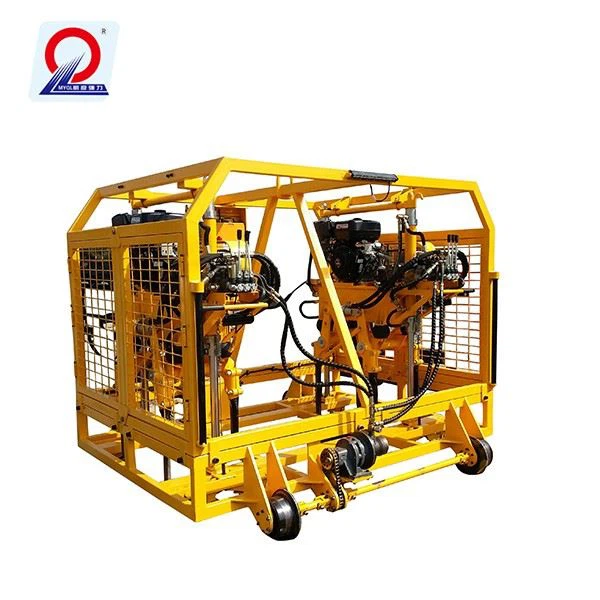
Figure: Side-by-side comparison of Qiangli's YCD-32, ND-4, and YD-22III tamping machines
Comparative Advantages for B2B Procurement
Choosing the right tamping machine impacts safety, efficiency, and return on investment. Here's how Qiangli machines outperform standard alternatives:
| Feature | Qiangli Machines | Standard Machines |
|---|---|---|
| Ballast Compaction Consistency | High-frequency hydraulic vibration ensures uniform compaction across sleepers | Manual or low-frequency mechanical tamping; uneven results |
| Track Geometry Precision | ±2 mm tolerance achievable | ±5–10 mm typical deviation |
| Operational Efficiency | ND-4: 14.5 kg, 120–150 Hz, up to 1,200 sleepers/hour YCD-32: 436 kg, 66.7 Hz, 800–1,000 sleepers/hour YD-22III: 1385 kg, 66.7 Hz, >300 sleepers/hour |
Typically 500–800 sleepers/hour |
| Certification | CE & ISO 9001 – meets international compliance standards | Local or no certification |
| Maintenance & Downtime | Hydraulic system designed for durability and minimal downtime | Higher wear and more frequent repairs |
Procurement Considerations for Railway Operators
- Match machine to track type: Mainline, high-speed, turnout, or urban lines
- Prioritize certification: CE and ISO 9001 ensure compliance and safety
- Evaluate efficiency: Compare sleepers/hour with your maintenance workload
- Consider environment: Low-noise or battery-powered options for sensitive areas
- Supplier support: Ensure training, spare parts, and maintenance services are available
- Adopt predictive maintenance: Maximize ROI and minimize derailment risk

FAQ
Q1: Are Qiangli tamping machines suitable for high-speed tracks?
A1: Yes. Models like the YD-22III are engineered for high-speed and heavy-haul lines, delivering the precision required to maintain tight track tolerances.
Q2: How does predictive tamping reduce derailment risk?
A2: By scheduling tamping based on real-time track geometry data, minor deviations are corrected before they escalate. Qiangli's CE-certified machines ensure consistent compaction, keeping tracks within safe operational limits.
Q3: What is the typical ROI for these machines?
A3: ROI varies by traffic volume and maintenance frequency, but most operators recover their investment within 2–3 years through reduced derailments, lower repair costs, and extended track lifespan.
Q4: Can these machines operate in extreme climates?
A4: Absolutely. All Qiangli tampers are tested for operation in temperatures from –20°C to +50°C and perform reliably in rain, snow, and high humidity.
Conclusion: Safety and Efficiency Begin Under the Tracks
B2B railway operators can significantly reduce derailment risk, protect valuable assets, and ensure cargo and passenger safety by investing in high-quality, CE-certified tamping equipment.
Henan Qiangli Machinery delivers precision-engineered tampers designed for diverse rail environments-backed by ISO certification, proven performance, and global support.

A well-maintained track starts with reliable tamping technology
References & Further Reading
- U.S. Federal Railroad Administration (FRA): www.fra.dot.gov
- European Union Agency for Railways (ERA): www.era.europa.eu
- International Union of Railways (UIC): www.uic.org
- ScienceDirect – Economic Impact of Rail Derailments: Transportation Research Part A
- Qiangli Rail Tamping Machines: www.qlrailwaymachine.com
📧 Email: elinachina@126.com
📞 WhatsApp: +86 15617710309
🌐 Website: www.qlrailwaymachine.com


