

High-Speed vs Conventional Rail Maintenance: 5 Reasons Advanced Tech Means Harder Work in 2025
High-Speed vs Conventional Rail Maintenance: 5 Reasons Advanced Tech Means Harder Work in 2025
🚄 If you think maintaining a 350 km/h high-speed line is "easier" than a freight track because of automation-you're risking safety, compliance, and budget overruns. The truth? HSR maintenance demands 3x more precision, 2x more data, and 5x more coordination than conventional rail.
Why "Smarter Rail = Easier Maintenance" Is a Dangerous Myth
In 2025, railway operators face a critical misconception: advanced technology reduces maintenance effort. Reality check: High-speed rail (HSR) doesn't simplify work-it shifts it from manual labor to system-level engineering.
While a conventional rail crew might fix a misaligned joint with a jack and gauge, an HSR team must analyze millimeter-level laser scans, validate slab track settlement models, and sync with ETCS/CTCS diagnostics-all within a 3-hour nighttime maintenance window.
1. Track Structure: Millimeter Precision vs. Practical Tolerance
High-Speed Rail Track Requirements
- Rails: High-strength alloy steel with continuous welded rails (CWR), eliminating joints.
- Track Bed: High-grade ballast or concrete slab tracks with vibration characteristics matched to high-speed trains.
- Geometry Tolerance: Maximum deviation of ±0.2 mm; vertical alignment must meet 1/1000 smoothness (e.g., ≤1 mm height change over 1 meter).
Conventional Railway Track Requirements
- Rails may include expansion gaps for thermal movement.
- Ballast beds allow minor settlement (±5–10 mm/year acceptable).
- Track gauge tolerance: often ±1.0 mm or more, adjusted manually.
Impact: HSR's tight tolerances mean every maintenance action must be measured, logged, and validated-turning routine tasks into precision engineering operations.
2. Maintenance Strategy: Predictive Intelligence vs. Proven Practice
Maintenance Comparison
| Aspect | High-Speed Rail | Conventional Railway |
| Approach | Planned & Predictive Maintenance | Periodic & Experience-Based |
| Core Technologies | Laser track measurement, Track Geometry Cars, AI anomaly detection, dynamic monitoring | Manual gauges, rail wrenches, visual inspections |
| Personnel | Engineers trained in data analysis, railway dynamics, and high-precision equipment | Skilled technicians with mechanical experience and safety certification |
3. Equipment & System Complexity
Rail Wear and Fatigue
At 350 km/h, contact stress concentrates on a tiny rail surface area. Precision grinding every 30,000–50,000 km is essential to prevent fatigue cracks-far more frequent than on conventional lines.
Track Bed and Foundation
HSR slab tracks require settlement control <2 mm over 10 years. Maintenance includes vibration compaction tests, drainage checks, and reinforcement-tasks rarely needed on conventional ballast.
Signaling and Train Control
Systems like ETCS Level 2 or CTCS-3 demand regular software updates, cybersecurity checks, and fault diagnostics. Conventional signaling uses simpler relay-based systems with lower skill requirements.
4. Why Advanced Tech Increases Workload
- Precision = More Measurements: Weekly geometry scans vs. monthly on conventional lines.
- Safety Margins Are Tighter: A 0.3 mm deviation can trigger emergency braking at 300 km/h.
- Management Complexity Rises: Coordinating track, power, signaling, and rolling stock teams requires integrated digital workflows.
5. Key Takeaways for 2025 Maintenance Planners
High-Speed Rail Maintenance: High precision, high frequency, highly specialized, data-driven, predictive.
Conventional Rail Maintenance: Periodic, experience-based, operationally flexible, lower precision requirements.
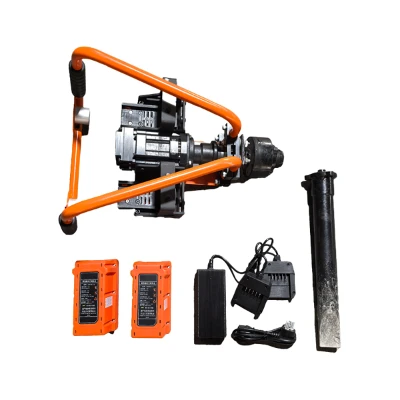
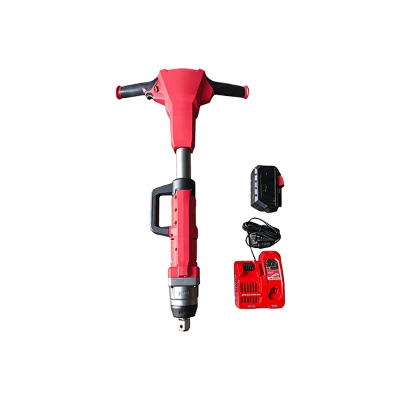
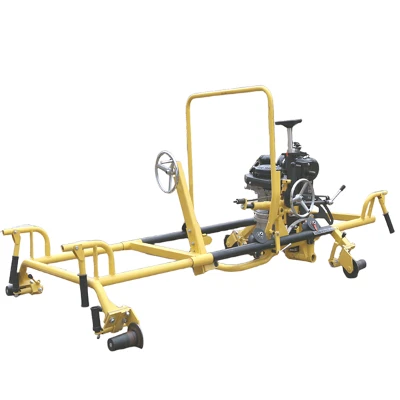
Planning maintenance for mixed-speed networks? Explore how modern hydraulic rail jacks and grinding systems support both HSR and conventional operations with adaptable precision.
📧 Email: elinachina@126.com
📞 WhatsApp: +86 15617710309
🌐 Website: www.qlrailwaymachine.com
Frequently Asked Questions (FAQ)
Q: Is high-speed rail easier to maintain than conventional rail?
A: No. Despite advanced technology, HSR requires tighter tolerances (±0.2 mm vs ±1 mm), predictive systems, and highly trained engineers-making it significantly more complex.
Q: What is the track geometry tolerance for high-speed rail?
A: Typically ±0.2 mm for alignment, with vertical smoothness within 1/1000 gradient.
Q: Why does HSR need more frequent maintenance?
A: At 350 km/h, minor irregularities cause safety or comfort issues, forcing weekly scans and precision interventions.


