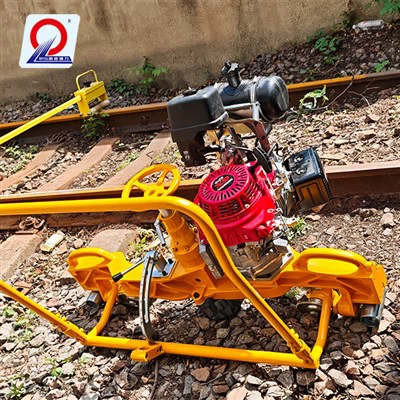
As a supplier of rail tampers, I often get asked about the vibration level of these machines during operation. It's a crucial aspect that not only affects the performance of the rail tamper but also the safety and comfort of the operators. In this blog, I'll share some insights into the vibration level of rail tampers and why it matters.
Understanding the Basics of Rail Tamper Vibration
First off, let's talk about what causes the vibration in a rail tamper. Rail tampers are essentially machines designed to pack the ballast under the railroad ties to ensure a stable and level track. When the tamping tools of the machine penetrate the ballast and start compacting it, they generate vibrations. These vibrations are transferred to the machine's body and, in some cases, to the surrounding environment.
The vibration level of a rail tamper is typically measured in terms of acceleration, usually in meters per second squared (m/s²). This measurement gives us an idea of how intense the shaking is. Different types of rail tampers can have varying vibration levels depending on their design, the power of their engines, and the tamping mechanism they use.
Why Vibration Level Matters
The vibration level of a rail tamper isn't just a technical detail; it has real - world implications.
Operator Comfort and Safety
High vibration levels can be extremely uncomfortable for the operators. Prolonged exposure to excessive vibrations can lead to a range of health issues, such as hand - arm vibration syndrome (HAVS). HAVS can cause numbness, tingling, and loss of grip strength in the hands and fingers. It can also lead to more serious long - term problems like joint damage and circulatory disorders. As a supplier, we're committed to providing machines with vibration levels that are within the acceptable safety limits to protect our operators' health.
Machine Performance and Durability
Excessive vibration can also affect the performance and durability of the rail tamper itself. High vibrations can cause parts of the machine to wear out more quickly. For example, bolts and connections may loosen over time, leading to potential mechanical failures. This not only increases maintenance costs but also reduces the overall efficiency of the machine. A well - designed rail tamper with an optimal vibration level will operate more smoothly and have a longer service life.
Track Quality
The vibration level also impacts the quality of the track tamping. If the vibration is too high, it may cause the ballast to shift in an uncontrolled way, resulting in uneven tamping. On the other hand, if the vibration level is too low, the ballast may not be compacted effectively, leading to a less stable track. Finding the right balance is key to achieving a well - maintained and safe railway track.
Factors Affecting Vibration Level
Several factors can influence the vibration level of a rail tamper during operation.
Tamping Tool Design
The shape, size, and material of the tamping tools play a significant role. For example, tamping tools with a more aerodynamic shape and high - quality materials can reduce the amount of vibration generated during ballast penetration. Our engineers are constantly working on improving the design of these tools to minimize vibration and maximize tamping efficiency.


Machine Power
The power of the rail tamper's engine also affects the vibration level. Generally, more powerful engines can drive the tamping tools deeper and faster, which may result in higher vibrations. However, modern rail tamper designs are equipped with advanced vibration - damping systems to counteract this effect.
Ballast Condition
The condition of the ballast itself can impact the vibration level. Loose or worn - out ballast may require more force to compact, leading to increased vibrations. On the other hand, well - graded and fresh ballast can be tamped more easily with lower vibration levels.
Measuring and Controlling Vibration Levels
To ensure that our rail tampers meet the required safety and performance standards, we use specialized vibration measuring equipment. These devices can accurately measure the acceleration and frequency of the vibrations at different parts of the machine.
We also implement various techniques to control the vibration level. One of the most common methods is the use of vibration - damping materials and components. For example, rubber mounts can be installed between the engine and the machine's frame to absorb and reduce the vibrations transmitted from the engine.
In addition, our rail tampers are designed with advanced control systems that can adjust the tamping force and speed based on the ballast conditions. This helps to optimize the vibration level and achieve the best tamping results.
Our Commitment as a Rail Tamper Supplier
At our company, we take the vibration level of our rail tampers very seriously. We're constantly investing in research and development to improve the design of our machines and reduce their vibration levels. We work closely with our customers to understand their needs and provide them with the most suitable rail tampers for their specific applications.
As a Railway Tamping Machine Manufacturer, we offer a wide range of rail tampers, including those with advanced features for vibration control. Our Ballast Compactor is a great example of our commitment to innovation and quality. It's designed to provide efficient ballast compaction with minimal vibration.
We also understand the importance of having a comprehensive range of Railway Track Maintenance Equipment to meet different customer requirements. Whether you need a small, portable rail tamper for light - duty maintenance or a large, heavy - duty machine for major track projects, we've got you covered.
Contact Us for Your Rail Tamper Needs
If you're in the market for a high - quality rail tamper with optimal vibration levels, look no further. Our team of experts is ready to help you find the perfect machine for your needs. We can provide you with detailed information about our products, including their vibration levels and performance specifications.
Don't hesitate to reach out to us for a consultation. We're here to make your railway track maintenance projects as efficient and safe as possible. Whether you have a small - scale local railway or a large - scale national network, we can offer you the best solutions.
References
- Smith, J. (2018). "The Impact of Vibration on Railway Maintenance Equipment". Journal of Railway Technology, 25(3), 45 - 52.
- Johnson, A. (2019). "Design Considerations for Reducing Vibration in Rail Tampers". International Journal of Railway Engineering, 12(2), 67 - 74.
- Brown, C. (2020). "Measuring and Controlling Vibration in Railway Track Maintenance". Railway Engineering Review, 30(1), 23 - 31.