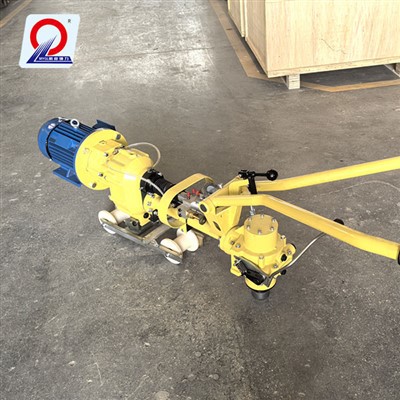
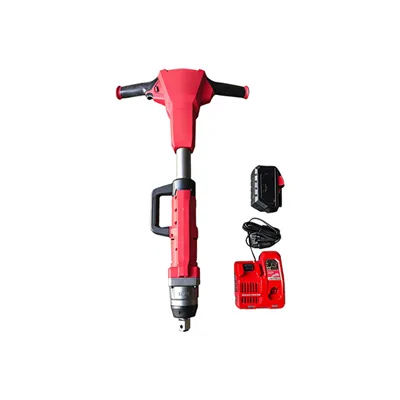
Yo, folks! I'm a supplier of Train Rail Grinders, and I'm stoked to chat with you about the impact of these bad - boys on track curvature maintenance. Let's dive right in!
First off, let's understand what track curvature maintenance is all about. Tracks aren't always straight; they have curves, and these curves need to be in tip - top shape for trains to run smoothly and safely. Curved tracks experience different kinds of wear and tear compared to straight ones. The outer rail on a curve bears more pressure from the train's centrifugal force, while the inner rail has its own unique set of challenges.
So, where do train rail grinders come into play? Well, these machines are like the superheroes of the railway maintenance world. They help in a bunch of ways when it comes to maintaining the curvature of the tracks.
One of the main impacts is on reducing uneven wear. Over time, the constant friction between the train wheels and the curved tracks causes uneven wear patterns. The outer rail on a curve can wear down faster on the gauge face, and the inner rail might have issues with the running surface. A train rail grinder can precisely target these areas and remove the unevenly worn material. By doing so, it restores the proper profile of the rail, which is crucial for maintaining the correct curvature. For example, if the gauge face of the outer rail is worn too much, it can lead to the train wheels not sitting properly, which might cause derailment risks. Our Rail Profile Grinder is specifically designed to handle these profile - related issues on curved tracks. It can grind the rail to the exact specifications required, ensuring that the curvature is maintained as per the design.
Another important aspect is improving the contact between the train wheels and the tracks. On curved tracks, the contact between the wheels and the rails is more complex than on straight tracks. Uneven wear can disrupt this contact, leading to increased noise, vibration, and even higher energy consumption for the trains. A well - maintained rail profile, achieved through grinding, allows for a better and more consistent contact between the wheels and the rails. This not only makes the ride smoother for passengers but also reduces the stress on the train components and the tracks themselves. Our Rail Waist Grinding Machine can be used to address any issues with the rail waist area on curved tracks. The rail waist is an important part that affects the overall stability of the rail, and proper grinding here can contribute significantly to maintaining the track curvature.
Train rail grinders also play a role in preventing cracks and defects. Curved tracks are more prone to developing cracks due to the additional stress they experience. Grinding the rails regularly can help remove the surface defects that might lead to cracks. For instance, small surface flaws can act as stress concentrators, and over time, these can grow into larger cracks that compromise the integrity of the track. A [Railroad Rail Grinder](https://www. ab.com/railway - maintenance - equipment/rail - grinding - machine/railroad - rail - grinder.html) can be used to smooth out the rail surface, eliminating these potential problem areas. By preventing cracks, the grinder helps in maintaining the long - term integrity of the track curvature. If a crack develops on a curved track, it can cause the rail to deform, which will directly affect the curvature and pose a serious safety risk.
In addition to the technical benefits, using train rail grinders for track curvature maintenance can also have economic advantages. By reducing the wear and tear on the tracks, the lifespan of the rails is extended. This means that railway operators don't have to replace the rails as frequently, which saves a ton of money in the long run. Also, the improved ride quality and reduced energy consumption of the trains can result in cost savings for the operators. And let's not forget about the safety aspect. A well - maintained track curvature reduces the risk of accidents, which can have huge financial and human costs.
Now, let's talk about how we, as a train rail grinder supplier, can help you. We offer a wide range of high - quality rail grinders that are designed to meet the specific needs of track curvature maintenance. Our machines are equipped with the latest technology and are built to last. Whether you're dealing with small - scale curvature maintenance on a local railway or large - scale projects on a major rail network, we've got you covered.
Our team of experts is always ready to provide you with the best advice on which grinder is the most suitable for your situation. We can also offer training on how to operate and maintain the machines properly. We understand that every railway system is unique, and we're committed to working with you to find the optimal solution for your track curvature maintenance needs.


If you're in the market for a train rail grinder or want to learn more about how our products can benefit your railway operations, don't hesitate to reach out. We're here to start a conversation and help you make the right decision. Whether it's for improving the safety of your tracks, reducing costs, or enhancing the overall performance of your railway system, our train rail grinders can make a real difference.
To sum it up, train rail grinders have a huge impact on track curvature maintenance. They help reduce uneven wear, improve wheel - rail contact, prevent cracks, and offer economic benefits. As a reliable supplier, we're dedicated to providing you with top - notch products and excellent service. So, if you're interested in taking your track curvature maintenance to the next level, let's get in touch and start this journey together!
References
- Railway Track Engineering and Mechanics, by George E. Lovell
- Handbook of Railway Engineering, edited by Andrew D. Kerr