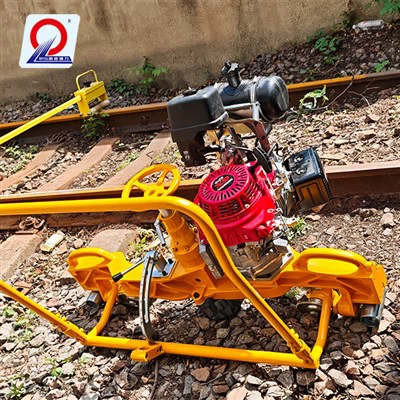
What is the control accuracy of a Track Lifter?
As a supplier of Track Lifters, I often get asked about the control accuracy of these essential pieces of equipment. In the railway maintenance industry, the control accuracy of a Track Lifter is of paramount importance, as it directly impacts the safety, efficiency, and quality of track maintenance operations.
Understanding the Concept of Control Accuracy
Control accuracy refers to the ability of a Track Lifter to precisely position and lift the railway track to the desired height and alignment. This involves a combination of factors, including the mechanical design of the lifter, the precision of its hydraulic or electric control systems, and the operator's skill and training.
A high - control - accuracy Track Lifter can ensure that the track is lifted to within a very small tolerance of the specified height. This is crucial because even a minor deviation in track height can lead to uneven wear on the rails and wheels, increased noise and vibration during train operation, and potentially dangerous situations such as derailments.
Factors Affecting Control Accuracy
Mechanical Design
The mechanical design of a Track Lifter plays a significant role in its control accuracy. A well - designed lifter will have a stable base and a robust lifting mechanism. For example, the use of high - quality materials and precision - engineered components can reduce the amount of play or movement in the system. This means that when the operator activates the lifting function, the track will be lifted smoothly and precisely, with minimal deviation from the intended path.
Some Track Lifters are designed with multiple lifting points, which can distribute the load evenly across the track. This not only helps to prevent damage to the track but also improves the control accuracy by ensuring that the track is lifted uniformly. Additionally, the shape and size of the lifting pads can affect the contact area with the track, and a larger, well - shaped contact area can provide more stable and accurate lifting.
Control Systems
Modern Track Lifters are often equipped with advanced control systems, such as hydraulic or electric controls. Hydraulic systems use fluid pressure to generate the lifting force, and they can offer precise control through the use of valves and pumps. These systems allow the operator to adjust the lifting speed and force with a high degree of accuracy. For instance, a variable - flow hydraulic pump can be used to fine - tune the lifting rate, ensuring that the track is lifted gradually and precisely.
Electric control systems, on the other hand, offer even greater precision and flexibility. They can be programmed to lift the track to a specific height and can provide real - time feedback on the lifting process. Some electric Track Lifters are equipped with sensors that can detect the position and alignment of the track, allowing for automatic adjustments to be made during the lifting operation.
Operator Skill and Training
Even the most advanced Track Lifter with high - end control systems requires a skilled operator to achieve optimal control accuracy. Operators need to be trained in the proper use of the equipment, including how to read the control panels, adjust the settings, and monitor the lifting process. They should also be familiar with the specific requirements of each track maintenance job, such as the desired track height and alignment.
Proper training can help operators to anticipate potential problems and take corrective actions in a timely manner. For example, if the track begins to tilt during the lifting process, a trained operator will know how to adjust the controls to correct the alignment quickly.
Importance of Control Accuracy in Railway Maintenance
Safety
The safety of railway operations is directly related to the control accuracy of Track Lifters. A well - lifted track with precise alignment reduces the risk of train derailments, which can have catastrophic consequences. When the track is lifted accurately, the wheels of the train will roll smoothly over the rails, minimizing the chances of wheel - rail contact problems such as flange climbing or derailment due to excessive lateral forces.


Efficiency
High - control - accuracy Track Lifters can significantly improve the efficiency of track maintenance operations. With precise control, the lifting process can be completed more quickly and with fewer adjustments. This means that the track can be returned to service in a shorter period of time, reducing the disruption to train schedules. Additionally, accurate lifting can reduce the need for re - work, saving both time and money.
Quality of Track Maintenance
Accurate control of the Track Lifter ensures that the track is maintained to the highest possible standards. The track height and alignment are critical factors in the long - term performance of the railway. A well - maintained track with precise elevation and alignment will have less wear and tear on the rails and wheels, prolonging their service life. This can lead to significant cost savings in the long run by reducing the frequency of track replacement and wheel turning.
How Our Track Lifters Ensure High Control Accuracy
As a Track Lifter supplier, we are committed to providing our customers with equipment that offers the highest level of control accuracy. Our Track Lifters are designed with the latest technology and engineering principles.
We use high - strength materials in the manufacturing of our Track Lifters to ensure a stable and robust structure. The lifting mechanisms are precision - engineered to minimize play and ensure smooth and accurate lifting. Our hydraulic and electric control systems are state - of - the - art, allowing for precise adjustment of the lifting speed and force.
In addition, we provide comprehensive training to our customers' operators. Our training programs cover everything from the basic operation of the Track Lifter to advanced troubleshooting and maintenance. This ensures that our customers' operators are well - equipped to achieve the highest level of control accuracy in their track maintenance operations.
Related Products
If you are interested in other railway maintenance equipment, we also offer a range of related products, such as Track Jack, Metal Railway Jack, and Hydraulic Rail Straightener. These products are also designed with high - quality materials and advanced control systems to ensure accurate and efficient railway maintenance.
Contact Us for Purchase and Negotiation
If you are in the market for a high - control - accuracy Track Lifter or any of our other railway maintenance equipment, we invite you to contact us for purchase and negotiation. Our team of experts is ready to assist you in finding the right equipment for your specific needs. We believe that our products and services can provide you with the best solution for your railway maintenance requirements.
References
- Railway Engineering Handbook, various editions. This handbook provides in - depth knowledge about railway track maintenance and the importance of equipment accuracy.
- Industry reports on railway maintenance equipment performance. These reports often contain data and analysis on the control accuracy of different types of Track Lifters.