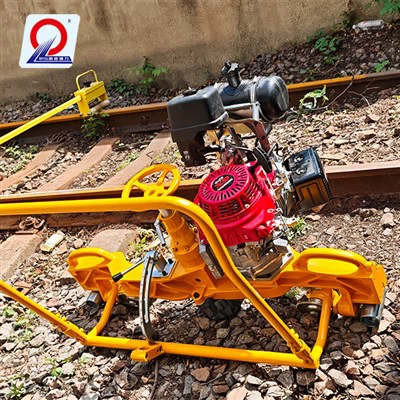
Hey there! As a supplier of rail grinding machines, I'm super stoked to chat about the hydraulic systems in these bad - boys. Rail grinding machines are crucial for maintaining railway tracks, and their hydraulic systems play a key role in making them work like a charm.
Let's start with the basics. A hydraulic system in a rail grinding machine is like the muscle of the whole operation. It uses pressurized fluid to transfer power and control different functions of the machine. The main components of a typical hydraulic system in a rail grinding machine include a hydraulic pump, hydraulic cylinders, valves, and a reservoir.
The hydraulic pump is the heart of the system. It's responsible for creating the pressure needed to move the hydraulic fluid. There are different types of pumps that can be used in rail grinding machines, like gear pumps, vane pumps, and piston pumps. Gear pumps are pretty common because they're simple, reliable, and cost - effective. They work by meshing gears that trap the hydraulic fluid and move it from the inlet to the outlet, creating pressure in the process.
Vane pumps, on the other hand, use vanes that slide in and out of slots in a rotor. As the rotor spins, the vanes create chambers that draw in and eject the hydraulic fluid, generating pressure. Piston pumps are more complex but offer higher pressure and better efficiency. They use pistons that move back and forth in cylinders to displace the fluid.
Once the pump has created the pressure, the hydraulic fluid is sent through a network of pipes and hoses to the hydraulic cylinders. These cylinders are what actually do the work. In a rail grinding machine, hydraulic cylinders are used for a variety of tasks. For example, they can be used to move the grinding heads up and down, side to side, or even tilt them at different angles. This allows the machine to precisely grind the rail to the desired profile.
Let's say you're using a Rail Profile Grinding Machine. The hydraulic cylinders will ensure that the grinding wheels are positioned correctly against the rail, whether it's for a simple surface grind or a more complex profile adjustment. They can apply the right amount of force to the grinding heads, making sure that the grinding process is both efficient and effective.
Valves are another important part of the hydraulic system. They control the flow and direction of the hydraulic fluid. There are different types of valves, such as directional control valves, pressure control valves, and flow control valves. Directional control valves determine which way the fluid will flow, allowing the hydraulic cylinders to move in the desired direction. Pressure control valves, as the name suggests, regulate the pressure in the system. They prevent the pressure from getting too high, which could damage the components of the system. Flow control valves, on the other hand, control the speed at which the hydraulic fluid flows, which in turn affects the speed of the hydraulic cylinders.
The reservoir is where the hydraulic fluid is stored. It also serves as a place for the fluid to cool down and for any air bubbles to escape. The fluid in the reservoir needs to be kept clean and at the right level. If the fluid level gets too low, the pump might start sucking in air, which can cause damage to the system. And if the fluid is dirty, it can clog the valves and other components, reducing the efficiency of the machine.
Now, let's talk about some of the advantages of using hydraulic systems in rail grinding machines. First of all, hydraulic systems offer a high power - to - weight ratio. This means that they can generate a lot of force with relatively small and lightweight components. This is really important for rail grinding machines, which need to be mobile and able to operate in different locations.
Secondly, hydraulic systems are very precise. They can control the movement of the grinding heads with a high degree of accuracy, allowing for very fine adjustments to the rail profile. This is crucial for maintaining the safety and performance of the railway tracks.
Another advantage is the smooth operation. Hydraulic systems provide a smooth and continuous motion, which is better for the grinding process. It reduces vibrations and wear on the grinding heads and other components, extending their lifespan.
There are also different types of rail grinding machines that use hydraulic systems. Grinding Trains are large - scale machines that are used for long - distance track maintenance. These trains are equipped with multiple grinding units, and the hydraulic systems are used to coordinate the movement and operation of all these units. They can grind multiple rails at the same time, making them very efficient for large - scale projects.
Rail Profile Weld Grinder is another type. It's used specifically for grinding the welds on the rails. The hydraulic system in this machine allows for precise control of the grinding head around the weld area, ensuring that the weld is smooth and flush with the rest of the rail.
However, like any system, hydraulic systems in rail grinding machines also have some challenges. One of the main challenges is leakage. Over time, the seals in the hydraulic cylinders and valves can wear out, causing the fluid to leak. This not only reduces the efficiency of the system but can also be a safety hazard. Regular maintenance and inspection are necessary to detect and fix any leaks early on.
Another challenge is the heat generated by the hydraulic system. As the fluid is pumped and pressurized, it can heat up. If the heat is not dissipated properly, it can damage the components of the system. That's why most hydraulic systems in rail grinding machines are equipped with cooling systems, such as radiators, to keep the fluid at a safe temperature.
In conclusion, the hydraulic systems in rail grinding machines are essential for their proper operation. They provide the power, precision, and control needed to grind the rails to the right profile. Whether you're using a small - scale Rail Profile Grinding Machine or a large - scale Grinding Train, the hydraulic system plays a vital role.


If you're in the market for a rail grinding machine, or if you have any questions about the hydraulic systems or our products, don't hesitate to reach out. We're here to help you find the right solution for your railway maintenance needs. Contact us for a detailed discussion and let's start a great partnership in keeping your railway tracks in top - notch condition.
References
- "Hydraulic Systems Handbook" by John F. Caruthers
- "Railway Track Maintenance: Principles and Practices" by Clive K. Carter