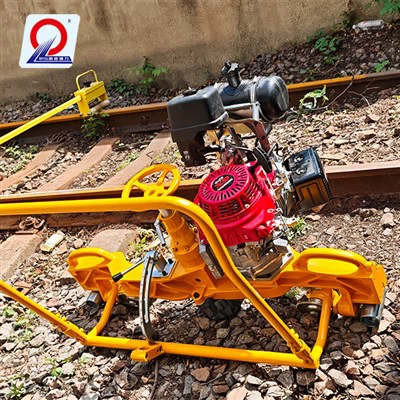
Hey there! As a supplier of rail grinding machines, I've seen firsthand how crucial these machines are in maintaining the integrity of railway tracks. Today, I'm gonna talk about how a rail grinding machine prevents rail cracks.
Understanding Rail Cracks
Before we dive into how rail grinding machines prevent cracks, let's first understand what causes them. Rails are under a lot of stress. Trains are heavy, and the repetitive load they place on the tracks can lead to all sorts of issues. Wear and tear, thermal stress, and friction from the wheels are some of the main culprits.
Over time, small surface defects can develop on the rails. These can be things like scratches, spalling, or corrugation. If left untreated, these minor issues can grow into more serious cracks. Cracks in the rails are a big deal. They can compromise the safety of the trains, leading to derailments and other accidents. Plus, they can also increase maintenance costs in the long run.
How Rail Grinding Machines Work
So, how do rail grinding machines come to the rescue? Well, these machines are like the superheroes of the railway world. They use a set of grinding stones or discs to remove a thin layer of the rail surface. This process is carefully controlled to ensure that the right amount of material is removed.
The grinding stones are mounted on a special frame that can be adjusted to match the profile of the rail. This allows the machine to grind the rail precisely, following its shape and contour. The machine moves along the track, and as it does, the grinding stones spin at high speeds, shaving off the damaged surface layer.
Preventing Cracks Through Surface Smoothing
One of the main ways a rail grinding machine prevents cracks is by smoothing the rail surface. When the surface is rough, it creates stress concentrations. These are areas where the stress from the train's load is concentrated, making it more likely for cracks to form.
By grinding the rail, we can eliminate these rough spots and create a smooth surface. This distributes the stress more evenly across the rail, reducing the chances of cracks developing. A smooth surface also reduces friction between the wheels and the rail, which in turn reduces wear and tear.
Removing Defects Before They Become Cracks
Another important function of rail grinding machines is to remove surface defects before they turn into cracks. As I mentioned earlier, small scratches and spalling can be the starting point for cracks. Rail grinding machines can detect these defects and grind them away.
The machines are equipped with sensors and monitoring systems that can identify areas of the rail that need attention. Once a defect is detected, the grinding stones can be adjusted to target that specific area. This proactive approach helps to prevent cracks from forming in the first place.
Restoring the Rail Profile
Rails have a specific profile that is designed to ensure proper contact between the wheels and the rail. Over time, this profile can become worn or deformed, which can lead to uneven stress distribution and crack formation.
A rail grinding machine can restore the rail to its original profile. By grinding the rail to the correct shape, we can ensure that the wheels roll smoothly and evenly, reducing the stress on the rail. This not only prevents cracks but also improves the overall performance of the railway system.
Different Types of Rail Grinding Machines
There are several types of rail grinding machines available, each with its own features and capabilities. For example, the Track Grinding Machine is designed for general track maintenance. It can cover large distances quickly and efficiently, making it ideal for long stretches of track.


The Train Track Grinder is more specialized and is often used for grinding specific sections of the track, such as curves and switches. These areas are more prone to wear and tear, so a more precise grinding is required.
The Rail Profile Grinder is focused on restoring the rail profile. It can accurately shape the rail to the desired specifications, ensuring optimal performance.
The Importance of Regular Maintenance
Regular maintenance with rail grinding machines is crucial for preventing rail cracks. It's not a one-time fix. Rails are constantly exposed to stress and wear, so they need to be inspected and ground on a regular basis.
By scheduling regular grinding sessions, we can catch any potential issues early and address them before they become major problems. This not only saves money in the long run but also ensures the safety of the railway system.
The Role of Technology in Rail Grinding
Technology has played a big role in improving the effectiveness of rail grinding machines. Modern machines are equipped with advanced control systems that can adjust the grinding process in real-time. These systems use sensors to monitor the rail condition and adjust the grinding parameters accordingly.
For example, if the sensors detect a particularly rough area of the rail, the machine can increase the pressure on the grinding stones or adjust their speed to ensure that the area is properly ground. This level of precision and control helps to prevent cracks more effectively.
Conclusion
In conclusion, rail grinding machines are essential for preventing rail cracks. They work by smoothing the rail surface, removing defects, restoring the rail profile, and using advanced technology to ensure precise grinding.
If you're in the railway industry and are looking for a reliable solution to maintain your tracks and prevent cracks, I encourage you to consider our rail grinding machines. We have a wide range of products to suit different needs and budgets. Whether you need a Track Grinding Machine, a Train Track Grinder, or a Rail Profile Grinder, we've got you covered.
If you're interested in learning more about our products or have any questions, feel free to reach out. We're always happy to have a chat and discuss how our rail grinding machines can benefit your railway system.
References
- American Railway Engineering and Maintenance-of-Way Association (AREMA) Manual for Railway Engineering
- International Union of Railways (UIC) standards on rail maintenance
- Various research papers on railway track maintenance and crack prevention