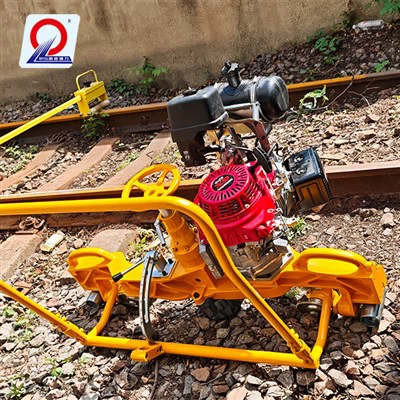
When it comes to the railway maintenance industry, the rail profile grinder is an indispensable piece of equipment. One of the most frequently asked questions by our customers is: What is the weight of a rail profile grinder? This seemingly simple question involves a lot of factors that are crucial for the design, operation, and overall performance of the grinder. As a leading Rail Profile Grinder supplier, we would like to share our in - depth knowledge on this topic.
Understanding the Role of Rail Profile Grinders
Before delving into the weight aspect, it's essential to understand the function of rail profile grinders. Rail profile grinders are used to restore and maintain the correct cross - sectional shape of railway rails. Over time, due to the continuous passage of trains, rails experience wear, corrugation, and other defects. These problems not only affect the smooth running of trains but also pose safety risks. Rail profile grinders work by removing a thin layer of the rail surface, eliminating defects and restoring the optimal rail profile.
Factors Affecting the Weight of a Rail Profile Grinder
1. Design and Structure
The overall design of the rail profile grinder plays a significant role in determining its weight. Grinders with a more robust and complex structure tend to be heavier. For instance, a multi - spindle grinder that can perform multiple grinding operations simultaneously will generally have a greater weight compared to a single - spindle unit. The materials used in the construction also matter. High - strength steel, which is commonly used for its durability, adds to the weight of the grinder. However, the use of such materials is necessary to withstand the high forces and vibrations generated during the grinding process.
2. Grinding Capacity
Another important factor is the grinding capacity of the machine. A grinder with a larger grinding capacity, which can remove more material per pass, usually requires a more powerful motor and larger grinding wheels. These components are heavier, and consequently, the whole machine will be heavier. For example, a grinder designed for heavy - duty applications on high - traffic railway lines will be much heavier than a small - scale grinder used for light - maintenance tasks on local tracks.
3. Mobility Requirements
The intended mobility of the rail profile grinder also affects its weight. Portable or handheld grinders are designed to be lightweight for easy transportation and operation by a single worker. These are typically used for minor repairs and spot - grinding jobs. On the other hand, self - propelled or rail - mounted grinders, which can travel long distances along the railway track, are heavier because they need to carry additional components such as engines, transmissions, and control systems.
Typical Weight Ranges of Rail Profile Grinders
Portable Rail Profile Grinders
Portable rail profile grinders are the lightest in the category. These are often used for small - scale repairs and can be carried by one or two workers. Their weight usually ranges from as low as 10 kilograms to around 50 kilograms, depending on their design and functions. These grinders are suitable for quick touch - up work, like removing small burrs or scratches on the rail surface.
Semi - portable Rail Profile Grinders
Semi - portable rail profile grinders offer a balance between portability and grinding power. They usually require a small vehicle or trailer for transportation but can be easily set up on the track. These grinders typically weigh between 50 kilograms and 200 kilograms. They are equipped with more powerful motors and larger grinding wheels compared to portable grinders, allowing for more efficient material removal.


Self - propelled and Rail - Mounted Rail Profile Grinders
Self - propelled and rail - mounted grinders are the heavyweights in the industry. These are used for large - scale railway maintenance projects, where they need to cover long distances and perform extensive grinding operations. The weight of these grinders can vary significantly, ranging from several hundred kilograms to several tons. Larger units designed for high - speed rail lines can weigh up to 10 tons or more. They are equipped with advanced features such as automatic profiling systems and high - precision control units, which contribute to their higher weight.
Importance of Weight in Rail Profile Grinder Selection
The weight of a rail profile grinder is not just a random number. It has a direct impact on several aspects of its use.
Transportation and Installation
For lighter portable and semi - portable grinders, transportation is relatively easy. They can be carried to the work site in a small van or even by hand in some cases. This makes them ideal for quick response to minor rail defects. However, heavier self - propelled or rail - mounted grinders require specialized transportation equipment such as flat - bed trucks or cranes. Installation also becomes more complex and time - consuming for heavier machines, as they need to be precisely positioned on the railway track.
Stability and Performance
The weight of the grinder affects its stability during operation. A heavier grinder generally provides better stability, especially when dealing with high - speed grinding or removing large amounts of material. This stability is crucial for achieving a smooth and accurate grinding result. On the other hand, a very heavy grinder might be more difficult to maneuver in tight spaces or on tracks with complex geometries.
Our Product Offerings
As a Rail Profile Grinder supplier, we offer a wide range of grinders to meet the diverse needs of our customers. Our Rail Waist Grinding Machine is designed for precise grinding of the rail waist area. It has an optimized weight, which ensures both portability and stability during operation. Our Railway Grinding Machine is suitable for large - scale railway maintenance projects. It is a heavy - duty machine with high - performance grinding capabilities. And our Railway Grinder provides a cost - effective solution for medium - sized maintenance tasks, offering a good balance between weight and performance.
Contact Us for Procurement
If you are in the market for a rail profile grinder, we are here to help. Our team of experts can assist you in selecting the right grinder based on your specific requirements, including the weight that suits your transportation, operation, and performance needs. Whether you need a lightweight portable grinder for quick repairs or a heavy - duty self - propelled machine for large - scale projects, we have the perfect solution for you.
References
- “Railway Maintenance Handbook” by John Smith, published by Railway Publishing House.
- “Modern Rail Grinding Technology” by Peter Johnson, Journal of Railway Engineering, 2020.