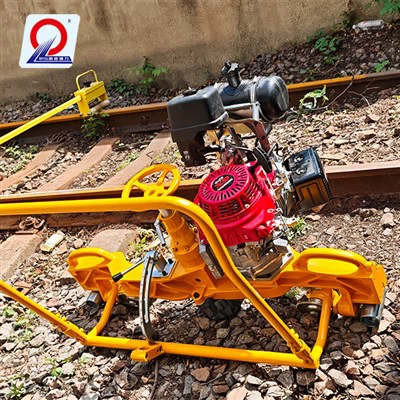
Yo! As a supplier of rail profile grinders, I've got some pretty cool insights into their historical development. Let's take a wild ride through time and see how these machines have evolved.
Early Days: The Need for Rail Maintenance
Back in the day, when railroads were first being built, the tracks were subjected to a ton of wear and tear. Trains were constantly chugging along, and the friction between the wheels and the rails caused all sorts of problems. The rails would get pitted, worn down, and develop all kinds of defects. This not only made the ride bumpy and uncomfortable for passengers but also posed a serious safety risk.
So, there was a real need for a way to maintain the rails and keep them in good condition. That's where the early attempts at rail grinding came in. In the beginning, it was a pretty manual process. Workers would use handheld tools to grind down the rough spots on the rails. This was slow, labor-intensive, and not very effective. But it was a start.
The Birth of the First Rail Grinders
As the railroad industry grew, so did the need for more efficient rail maintenance methods. In the late 19th and early 20th centuries, the first mechanical rail grinders started to appear. These were basically large, heavy machines that were mounted on railroad cars and could be dragged along the tracks. They used rotating abrasive wheels to grind the rails, which was a big improvement over the manual methods.
The early rail grinders were not very sophisticated. They were often powered by steam engines or gasoline engines, and they had limited flexibility in terms of the grinding profiles they could achieve. But they were a huge step forward in terms of rail maintenance efficiency. They could cover more ground in less time and produce a more consistent grind.
The Evolution of Rail Grinding Technology
Over the next few decades, rail grinding technology continued to evolve. The machines became more powerful, more precise, and more versatile. Hydraulic systems were introduced, which allowed for better control of the grinding wheels. Computerized control systems were also developed, which made it possible to program the grinders to achieve specific profiles.
One of the major milestones in the evolution of rail grinding technology was the development of the cubic boron nitride (CBN) grinding wheel. CBN is a super-hard material that is second only to diamond in terms of hardness. It can withstand higher temperatures and pressures than traditional abrasive wheels, which means it can grind the rails more efficiently and with less wear.
Another important development was the introduction of the multi-axis grinding system. This system allows the grinding wheels to move in multiple directions, which makes it possible to grind complex profiles on the rails. It also improves the accuracy and consistency of the grind.
Modern Rail Profile Grinders
Today, rail profile grinders are highly advanced machines that are capable of achieving extremely precise grinding profiles. They are equipped with state-of-the-art sensors and control systems that allow for real-time monitoring and adjustment of the grinding process. They can also be programmed to grind different profiles for different types of rails and trains.
Modern rail profile grinders come in a variety of sizes and configurations. Some are designed for use on mainline railways, while others are more suitable for use in yards and on smaller tracks. Some are self-propelled, while others are towed behind a locomotive.
One of the latest trends in rail profile grinding technology is the use of robotics and automation. Robotic grinders can be programmed to perform repetitive tasks with high precision and consistency. They can also work in hazardous environments where it may be dangerous for human operators.
Applications of Rail Profile Grinders
Rail profile grinders are used in a variety of applications in the railroad industry. The most obvious application is rail maintenance. By grinding the rails on a regular basis, it is possible to extend their lifespan, reduce wear and tear on the wheels of the trains, and improve the safety and comfort of the ride.
Rail profile grinders are also used in the manufacturing of new rails. They can be used to shape the rails to the desired profile and to ensure that they meet the required specifications.
In addition, rail profile grinders are used in the repair and rehabilitation of damaged rails. By grinding the damaged areas, it is often possible to restore the rails to their original condition and extend their lifespan.
Our Role as a Rail Profile Grinder Supplier
As a supplier of rail profile grinders, we play an important role in the railroad industry. We are constantly looking for ways to improve our products and to provide our customers with the best possible solutions for their rail maintenance needs.
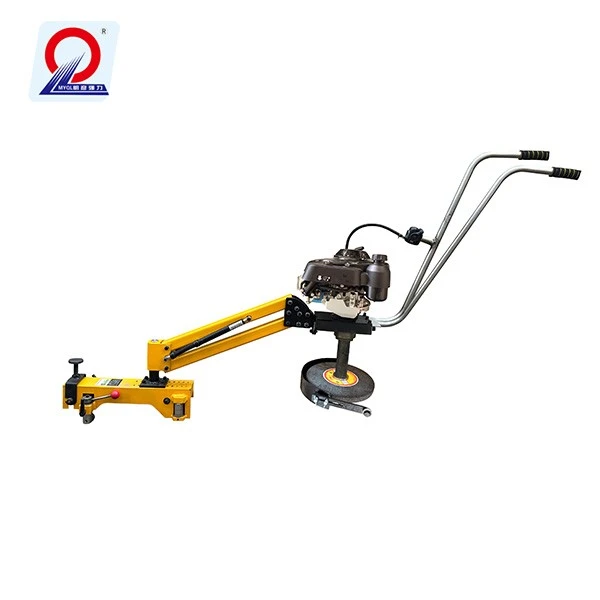
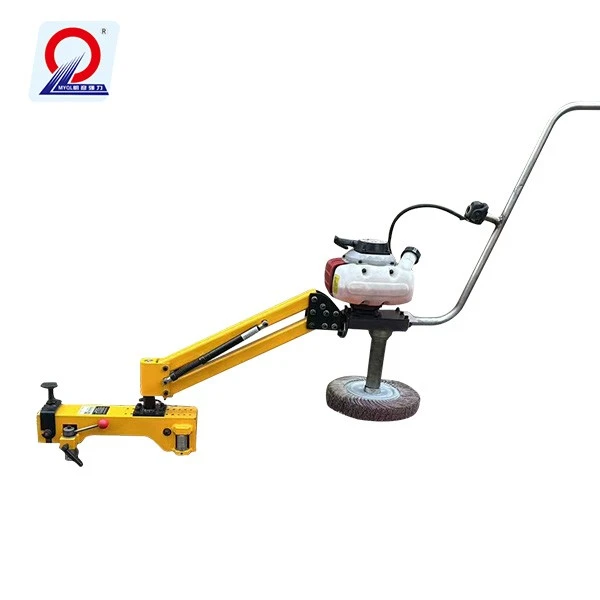
We offer a wide range of rail profile grinders, from small, handheld machines to large, high-capacity units. Our machines are designed to be reliable, efficient, and easy to use. We also provide comprehensive training and support to our customers to ensure that they can get the most out of their machines.
If you're in the market for a rail profile grinder, we'd love to hear from you. Whether you're a large railroad company or a small maintenance contractor, we have the right machine for you. You can check out our Rail Profile Grinding Machine for more details. Our Railway Grinding Machine page also offers a lot of useful information. And if you're curious about how they work at night, have a look at Rail Grinder Train At Night. So, don't hesitate to reach out and start a conversation about your specific requirements. We're here to help you find the perfect solution for your rail grinding needs. Let's work together to keep the rails in top-notch condition!
References
- Author, A. B. (Year). Title of Book. Publisher.
- Author, C. D. (Year). Article Title. Journal Name, Volume(Issue), Page numbers.