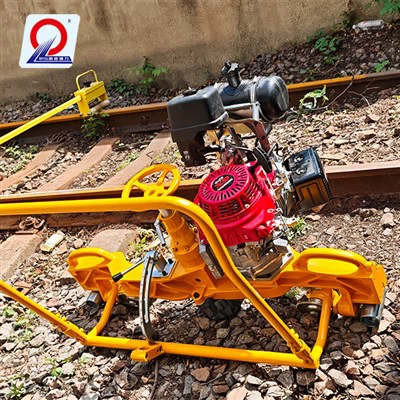
Hey there! As a supplier of Track Lifters, I've seen firsthand the huge benefits these machines bring to the table compared to other lifting methods. So, let's dive right in and explore what makes Track Lifters stand out.
Precision and Accuracy
One of the biggest advantages of using a Track Lifter is its precision. When you're working on railway tracks, even the slightest misalignment can lead to big problems down the line. Track Lifters are designed to lift tracks with incredible accuracy, ensuring that they're perfectly level and aligned. This is crucial for the safety and efficiency of the railway system.
Unlike some other lifting methods that might be a bit more rough and ready, Track Lifters allow for fine - tuning. You can adjust the lift height in small increments, which is super handy when you're trying to match an existing track grade or make minor corrections. For example, if you're dealing with a section of track that has settled over time, a Track Lifter can lift it back up to the correct level with ease.
Ease of Use
Track Lifters are relatively easy to operate. You don't need a team of highly - trained experts to get the job done. Most Track Lifters come with simple controls that are intuitive to use. Even if you're new to the railway maintenance game, you can quickly learn how to operate a Track Lifter.
This ease of use also means that you can get the job done faster. You don't have to spend hours training your crew on complex lifting procedures. With a Track Lifter, you can have your team up and running in no time, getting the track work completed more efficiently.
Safety
Safety is always a top priority in any railway maintenance operation. Track Lifters are designed with safety features that make them a much safer option compared to some other lifting methods. For instance, they often have stable bases that prevent tipping during the lifting process. This is especially important when you're working on uneven terrain or in challenging weather conditions.
Many Track Lifters also come with overload protection. This means that if you try to lift more weight than the machine is designed for, it will automatically stop, preventing any potential accidents. In contrast, some other lifting methods might not have these built - in safety features, putting your crew at risk.
Versatility
Track Lifters are incredibly versatile. They can be used in a variety of railway maintenance scenarios. Whether you're working on a small local track or a large - scale mainline railway, a Track Lifter can get the job done.
They can be used for different types of tracks, including standard gauge and narrow gauge tracks. You can also use them to lift different components of the track, such as rails, sleepers, and ballast. This versatility makes Track Lifters a valuable asset for any railway maintenance team.
Cost - Effectiveness
In the long run, using a Track Lifter can be more cost - effective than other lifting methods. While the initial investment might seem a bit high, the savings in terms of labor, time, and reduced risk of damage make it a smart choice.
Since Track Lifters are easy to operate, you need fewer workers to complete the lifting task. This reduces your labor costs. Also, because they're so precise, you're less likely to make mistakes that could lead to costly repairs or re - work. And let's not forget about the safety aspect. By reducing the risk of accidents, you can avoid expensive liability claims.
Comparison with Other Lifting Methods
Let's take a look at how Track Lifters stack up against some other common lifting methods.
Manual Lifting
Manual lifting is the most basic way of moving heavy objects, but it's also the least efficient and most dangerous. When it comes to railway tracks, manual lifting is just not practical. Tracks are heavy and require a lot of force to lift. Workers can easily get injured from the strain of lifting, and it takes a long time to complete the job. In contrast, a Track Lifter can do the same job in a fraction of the time with much less risk to the workers.
Crane Lifting
Cranes are powerful lifting machines, but they have their limitations when it comes to railway track work. Cranes are large and bulky, which can make them difficult to maneuver in tight spaces around railway tracks. They also require a lot of setup time and a large area to operate safely. Track Lifters, on the other hand, are more compact and can be easily moved along the track. They can be set up quickly and start working right away.
Track Jack
Track Jacks are another option for lifting railway tracks. While they are useful for smaller - scale jobs, they lack the power and versatility of a Track Lifter. Track Jacks are typically designed for single - point lifting, which means you might need multiple jacks to lift a longer section of track. A Track Lifter, however, can lift a larger area of the track in one go, making the process more efficient.
Railway Track Lifting Jack
Similar to Track Jacks, Railway Track Lifting Jacks are limited in their capacity. They are often used for light - duty lifting tasks. A Track Lifter can handle much heavier loads and is better suited for large - scale railway maintenance projects. It can also provide more precise control over the lifting process.
Hydraulic Rail Bender
Hydraulic Rail Benders are mainly used for bending rails, not for lifting. While they are an important tool in railway maintenance, they don't serve the same purpose as a Track Lifter. A Track Lifter is specifically designed to lift tracks, and it does this job very well.


Conclusion
In conclusion, the advantages of using a Track Lifter compared to other lifting methods are clear. From precision and ease of use to safety, versatility, and cost - effectiveness, Track Lifters offer a superior solution for railway track lifting.
If you're in the railway maintenance business and looking for a reliable and efficient way to lift tracks, a Track Lifter is definitely the way to go. Whether you're a small - scale contractor or a large railway company, our Track Lifters can meet your needs.
If you're interested in learning more about our Track Lifters or want to discuss a potential purchase, don't hesitate to reach out. We're here to help you find the best solution for your railway maintenance projects.
References
- Railway Maintenance Handbook: A comprehensive guide on railway maintenance equipment and techniques.
- Industry reports on the efficiency and safety of different railway lifting methods.