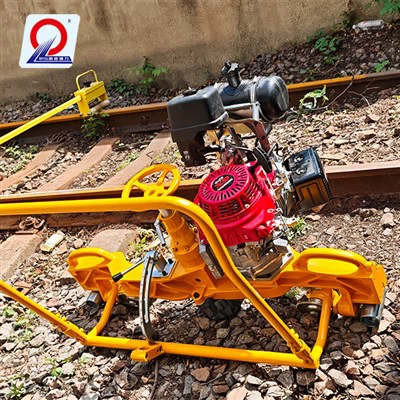
As a supplier of Track Lifters, I often encounter inquiries from customers about the versatility and specific applications of our products. One question that frequently arises is whether a Track Lifter can be used for lifting tracks in a horizontal position. In this blog post, I will delve into this topic, exploring the technical aspects, practical considerations, and potential benefits of using a Track Lifter for horizontal track lifting.


Technical Feasibility
To understand whether a Track Lifter can be used for horizontal track lifting, it's essential to first understand the basic design and functionality of these tools. A typical Track Lifter, such as the ones we offer at Track Lifter, is a hydraulic device designed to lift heavy railroad tracks vertically. It consists of a hydraulic cylinder, a base, and lifting arms that are specifically engineered to engage with the tracks and provide the necessary force to lift them.
While the primary purpose of a Track Lifter is vertical lifting, its design can be adapted to accommodate horizontal lifting in certain situations. The key lies in the ability of the lifting arms to grip the tracks securely and the hydraulic system to generate sufficient force to move the tracks horizontally. Most modern Track Lifters are equipped with adjustable lifting arms that can be positioned to provide a stable grip on the tracks, regardless of their orientation. Additionally, the hydraulic system is designed to deliver a high level of force, which can be used to overcome the friction and resistance associated with moving heavy tracks horizontally.
Practical Considerations
While the technical feasibility of using a Track Lifter for horizontal track lifting is evident, there are several practical considerations that need to be taken into account. One of the main challenges is ensuring the stability of the tracks during the lifting process. Unlike vertical lifting, where the tracks are supported by the ground, horizontal lifting requires additional support to prevent the tracks from tipping or shifting. This can be achieved by using additional equipment, such as track supports or shoring, to provide a stable base for the tracks.
Another important consideration is the weight and length of the tracks. Horizontal lifting requires more force than vertical lifting, especially for longer and heavier tracks. It's essential to ensure that the Track Lifter is capable of generating sufficient force to lift the tracks safely and efficiently. Additionally, the lifting capacity of the Track Lifter should be matched to the weight and length of the tracks to prevent overloading and potential damage to the equipment.
Potential Benefits
Despite the challenges associated with horizontal track lifting, there are several potential benefits to using a Track Lifter for this purpose. One of the main advantages is the increased efficiency and productivity that can be achieved. Horizontal lifting allows for the tracks to be moved quickly and easily into position, reducing the time and labor required for track installation or maintenance. This can result in significant cost savings for railroad companies and contractors.
Another benefit is the improved safety and accuracy that can be achieved with horizontal track lifting. By using a Track Lifter, the tracks can be lifted and positioned with greater precision, reducing the risk of accidents and injuries. Additionally, the use of a hydraulic system provides a more controlled and consistent lifting force, which can help to prevent damage to the tracks and the surrounding infrastructure.
Applications
There are several applications where using a Track Lifter for horizontal track lifting can be beneficial. One of the most common applications is in track installation and maintenance. Horizontal lifting allows for the tracks to be moved into position quickly and easily, reducing the time and labor required for these tasks. This can be particularly useful in areas where access is limited or where the tracks need to be installed or replaced in a short period of time.
Another application is in track alignment and adjustment. Horizontal lifting can be used to adjust the position of the tracks to ensure proper alignment and gauge. This can help to improve the safety and performance of the railroad system, reducing the risk of derailments and other accidents.
Conclusion
In conclusion, while a Track Lifter is primarily designed for vertical track lifting, it can be used for horizontal track lifting in certain situations. The technical feasibility of using a Track Lifter for horizontal lifting is evident, and there are several practical considerations that need to be taken into account. However, the potential benefits of using a Track Lifter for this purpose, such as increased efficiency, productivity, safety, and accuracy, make it a viable option for many railroad companies and contractors.
If you are interested in learning more about our Track Lifters or other railway maintenance equipment, such as the Railroad Track Lifter or the Hydraulic Rail Bender, please feel free to contact us. Our team of experts is available to answer any questions you may have and to provide you with more information about our products and services. We look forward to working with you to meet your railway maintenance needs.
References
- Railway Track Engineering and Technology, by John B. Ch way
- Handbook of Railway Engineering, by Andrew D. Rose